

Spotlight
Vascular surgeons and research nurses team up to find the most effective post-angioplasty treatment
Our trust is one of 13 centres in the UK taking part in an innovative trial that aims to determine which antithrombotic (blood thinning) medications are most effective at preventing complications after an angioplasty.
An angioplasty is a medical procedure used to widen narrowed or blocked arteries with a balloon or stent, with most patients usually given blood thinner medications designed to prevent blood clots – lowering the chance of the patient needing an amputation.
While there are many types of blood thinners, two of which are sometimes used together, the optimal treatment after leg angioplasty has never been systematically studied before.
The CLARITY PAD trial (Clopidogrel, Aspirin and Rivaroxaban after revascularisation with angioplasty for limb-threatening Peripheral Arterial Disease) is comparing three commonly used blood-thinner treatments, to see if a certain tablet or combination of tablets leads to better health after angioplasty.
By running the trial, researchers aim to find out which blood-thinner treatment is better at preventing health problems in patients, such as blocked leg arteries, amputation (leg loss), heart attacks, strokes, serious bleeding, and other health outcomes.
The trial is due to run for around three years, with patients taking part chosen at random by a computer to receive either clopidogrel alone, aspirin and clopidogrel, or aspirin and rivaroxaban.
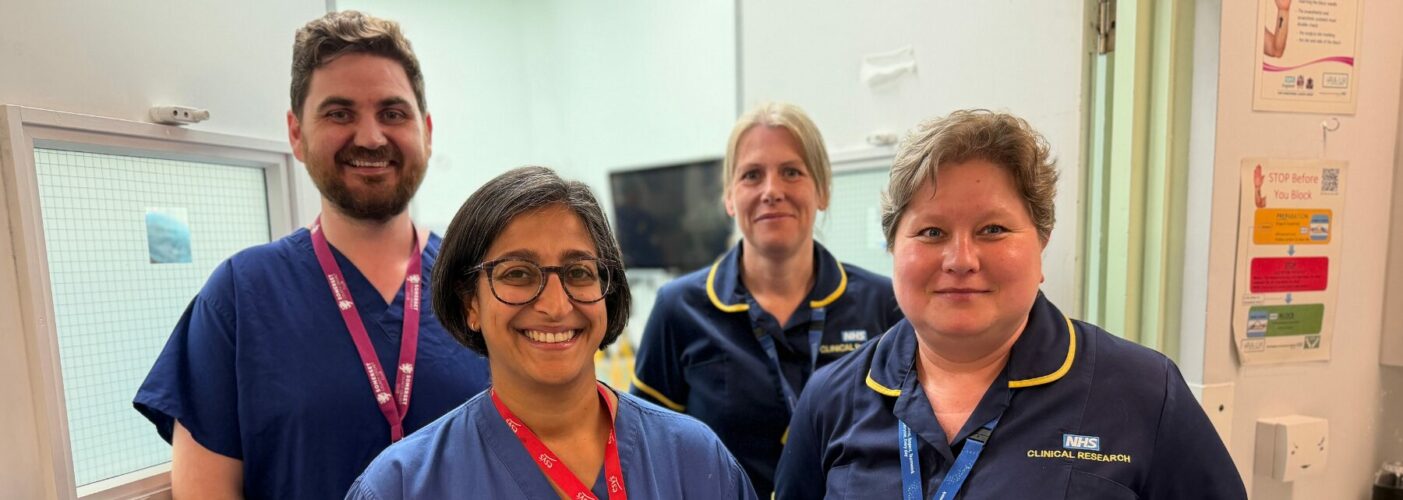
Miss Natasha Chinai, one of our consultant vascular surgeons and principal investigator, says she’s pleased that our trust is taking part in the study, as it could improve the outcome for a large group of patients.
“A large amount of evidence and data have been published that suggests the mortality in five years for those with chronic limb-threatening ischaemia (57%) – the most severe form of peripheral artery disease – is second only to lung cancer (80%),” she says.
“There are a number of interventions we can do for these patients, one of which is an angioplasty (balloon treatment) under vascular surgery.
“We put everyone with a build-up of fats, cholesterol and other substances on the artery walls onto either aspirin or clopidogrel – the latter is a preference in peripheral arterial disease.
“But when those patients undergo an angioplasty, we don’t know what the best treatment regimen is for them to be on afterwards – whether that’s just clopidogrel, or combining it with aspirin, or even a direct oral anticoagulant, such as rivaroxaban.
“As we don’t know the best treatment option for patients, and want to reduce the risk of amputation, we’re randomising every eligible patient needing an angioplasty, who agrees to be part of the trial, into three different treatment groups: aspirin and clopidogrel; clopidogrel alone; or aspirin and rivaroxaban.
“Each patient then stays on that treatment regimen for up to three years, and we will look at measures such as amputation rates, survival rates, and the number of interventions needed, to determine the results of the study."
Miss Chinai adds that a lot of background work has been done before launching the study, to make sure it’s safe to run.
“I met with Professor Chris Twine – consultant vascular surgeon at North Bristol NHS Trust, honorary professor of vascular surgery at the University of Bristol, and chief investigator for CLARITY PAD – where we did some research to look at the safety profiles of the treatments, before deciding what we would choose for this randomised trial,” she adds.
“We see each patient in clinic, and then a multidisciplinary team of radiologists, vascular surgeons, and research nurses meet to make a plan on what their intervention is going to be, and this is where we identify patients who could take part in the trial.
“We’re doing really well so far in Somerset, and are consistently in the top five out the 17 centres involved in the trial when it comes to recruitment of patients – we recruited our 25th patient in early April.
“Our overall recruitment target is 75 over the three years, so we’re well on our way to achieving this, given we started a year ago.
“All the work is done by our amazing research nurses of course, as they are tireless in chasing us and asking us to check whether we can recruit patients... we couldn’t do any of this research without them.”