

Spotlight
Theatre nursing associate uses fellowship to improve evidence-based wound care practice
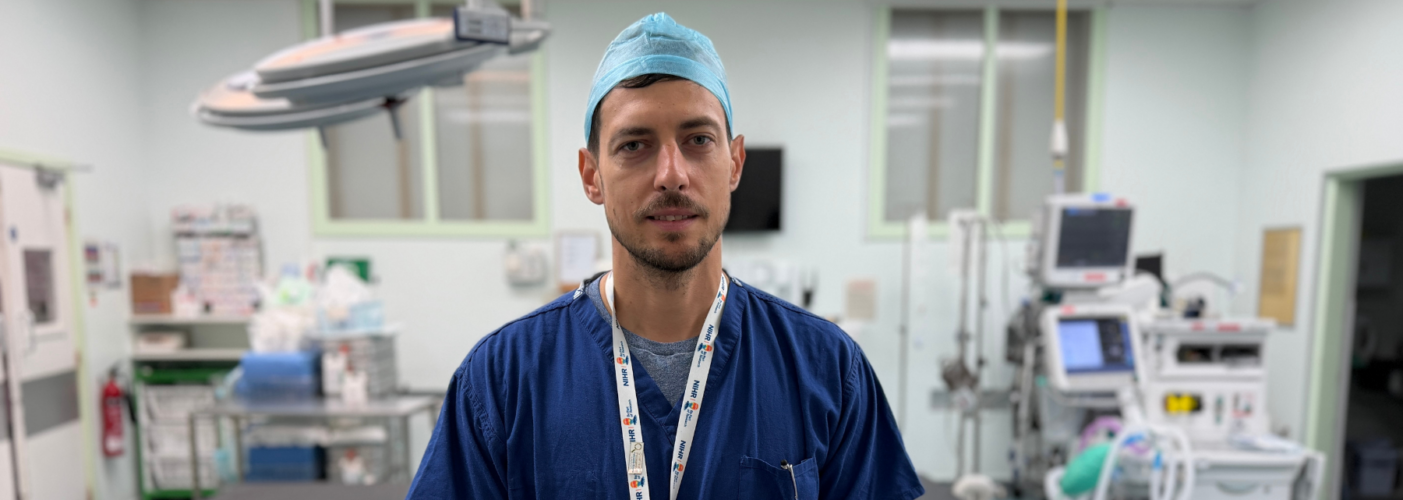
A nursing associate from our theatres team at Musgrove Park Hospital has used the Chief Nurse Research Fellowship to examine an everyday area of clinical practice and identify opportunities to strengthen care for patients undergoing surgery.
Andrei Niga joined the trust 12 years ago as a healthcare assistant on the staff bank, before completing the trainee nursing associate programme and joining our operating theatres.
Although theatres was a completely new environment for him, he quickly developed an interest in the work of the team and the patient journey through surgery.
After qualifying, Andrei completed his preceptorship and successfully joined the Chief Nurse Research Fellowship Programme in September 2025.
As part of the programme, he chose to explore postoperative wound cleansing practices within general theatres, an important aspect of care that had not previously been standardised.
“Wound care is one of the most frequent clinical interventions we provide in the NHS,” says Andrei.
“My goal was simple: to evaluate our current practice, align it with national guidance and ensure our patients receive consistent, evidence-based care every time.”
National guidance recommends the use of sterile saline for cleansing surgical wounds in the early postoperative period. Wanting to understand how closely local practice aligned with those recommendations, Andrei designed a clinical audit across the four operating theatres in the Old Building – which have recently relocated to the newly opened King’s Building.
The audit ran between January and February 2026 and involved 130 elective surgical procedures across seven specialties. Scrub practitioners recorded the wound cleansing solution used at the end of each operation, alongside details about the procedure and wound type.
The findings showed that sterile saline was used in 42 of the 130 cases audited, while cetrimide was used in 82 cases. The audit also highlighted variation between specialties and identified opportunities to improve awareness of national guidance and introduce more consistent documentation.
As a result of the work, clear standardised documentation has now been developed for scrub practitioners, helping colleagues record wound cleansing practices more consistently and supporting future improvements.
The project has also provided a clearer understanding of current practice and highlighted opportunities to strengthen alignment with national standards.
“The fellowship gave me the structure, mentorship and governance support needed to turn a clinical observation into a formal audit project,” continues Andrei.
“Clinical colleagues rarely have protected time to step back, examine data and challenge everyday practice, but this experience showed me how evidence can be used to review what we do and help improve patient care.”
As part of the programme, Andrei also developed his academic writing skills and published two papers in the South West Clinical School Journal, sharing the methodology, findings and learning from the audit with a wider audience.
Andrei is now continuing to promote evidence-based practice within the department through team briefings and visual displays.
With support from theatres manager, Charlotte Parkman, he is also developing a research and evidence board in the King’s Building surgical centre, helping colleagues access the latest guidance, literature and examples of best practice.
He hopes the project will encourage other colleagues to be curious about their own areas of practice and to feel confident using evidence to improve patient care.
“I’m grateful for the support and guidance from both our theatres team and our research department,” he adds.
“I want to encourage colleagues to be evidence-aware practitioners, regularly looking at the latest standards and guidance in their own specialties. Small changes to everyday practice can make a real difference to patient safety and patient experience.”