

Spotlight
Nurse Olga Richardt leads project into how colleagues deliver difficult news to patients
One of our surgical care practitioners is leading a new study to understand how confident healthcare colleagues are in delivering difficult news to patients, and whether more training is needed.
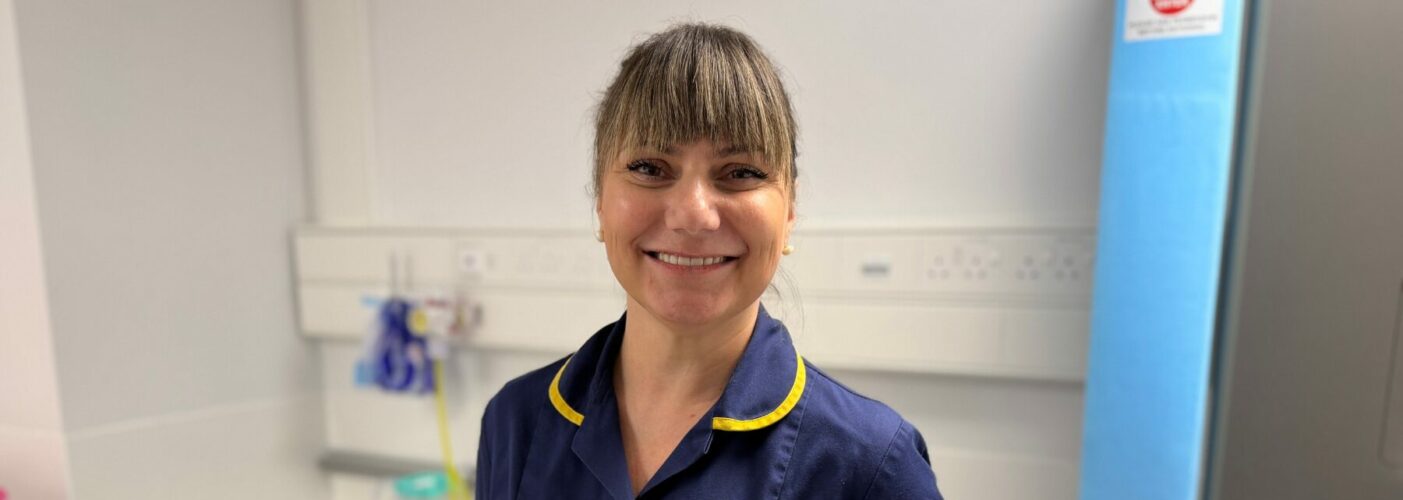
Olga Richardt, who works in the surgical decisions unit at Musgrove Park Hospital, is carrying out the project as part of the Chief Nurse Research Fellowship.
With nearly two decades of nursing experience across a range of roles in Romania and the UK, Olga says her project was shaped by the realities of day-to-day clinical practice, where difficult conversations extend far beyond cancer diagnoses.
“Breaking bad news is not necessarily something that may be about a cancer diagnosis, but also outside of the oncology work,” she says.
“We can give bad news to patients in regards to their surgeries, or delay in surgeries, and anything that affects the patient perception regarding their care, negatively, can be bad news.”
Her project focuses on surgical services, looking at how many colleagues have received training in delivering bad news, how confident they feel doing so, and the approaches they use in practice.
“Some of us have had training, but not everyone, and as a large workforce with varied academic backgrounds, our levels of knowledge naturally differ,” says Olga.
“I would like to understand how many of us have actually received training in delivering bad news to patients outside the oncology area.”
She has developed the project using a validated questionnaire based on established communication models, alongside additional questions to better understand the local workforce.
Communication, she says, sits at the heart of the work. “Whenever we have a break in communication it affects the trust between the clinician and the patient,” Olga says.
“We have a very sensitive approach and I’m sure that all my colleagues are doing their best, but certain information can be perceived differently if it’s not delivered in the right way.”
Olga believes improving confidence and consistency in how difficult information is shared could have a significant impact on patient experience.
She adds: “It will be very beneficial to put in place a positive communication and relationships with the medical team. We are able to deliver information in a more empathic way, structured and enough for the patient to be able to have that background knowledge to make informed decisions.
“Even everyday scenarios, such as cancelled or delayed operations, can be distressing for patients and require careful handling.
“It’s really important to deliver this news in a way that allows them to express themselves, feel heard, but also positively reinforce that we are doing our best and that they remain our priority.”
The project was also driven by Olga’s own reflection on her practice and patient feedback.
“I found myself in a position on a daily basis where I delivered bad news,” she says. “Patient feedback is always very important, and I could see some people getting more distressed, so I asked myself whether there could be a better way of doing this.”
Olga is now gathering responses from colleagues across surgical services, including specialist nurses, advanced practitioners and enhanced practitioners, as part of an anonymous survey. She hopes the findings will help identify gaps in training and support further professional development.
“I will aim to publish the results of my survey and then present them to our governance team, and see whether there would be a way of encouraging nurses to come forward for training in breaking bad news,” she says.
Alongside the project, Olga says the fellowship has sparked a growing interest in research and how it can be embedded more widely in nursing practice.
“At the moment nurses aren’t really involved, but we want to create a better culture in research,” she says. “I think the more nurses get involved in research or are aware of it, the better care can be achieved.”