

Spotlight
New peer support group brings together people living with interstitial lung disease
A new peer support group has been launched at Burnham-on-Sea Community Hospital to bring together people living with interstitial lung disease and help them feel less isolated.
The group, the first of its kind in Somerset, has been created by colleagues from our respiratory and supportive and palliative care teams after patients said they wanted opportunities to meet other people living with the same condition.
Interstitial lung disease, often shortened to ILD, is an umbrella term covering more than 200 different conditions affecting the lungs. It can cause inflammation and scarring of the tissue surrounding the lungs’ air sacs, making the lungs stiffer and breathing more difficult.
Some types of ILD can be linked to other health conditions, medicines or exposure to substances such as dust, mould or bird feathers. In many cases, however, its cause is unknown.
Common symptoms include breathlessness, a persistent cough and fatigue, although people’s experiences and the progression of their condition can vary. Treatment depends on the type of ILD and may include medicines, pulmonary rehabilitation, oxygen or support to manage symptoms.
Ianne Dempster, one of our respiratory nurse specialists, explains: “Interstitial lung disease is a complex condition because every person's experience can be different. In many cases, we don’t know what has caused the lung scarring, although some cases may be linked to environmental or occupational exposures.
“My role is to manage the caseload, support patients with symptoms such as breathlessness, monitor their response to treatment, and coordinate care to ensure they receive the right support at the right time.
“People with interstitial lung disease can sometimes feel isolated because it is a relatively uncommon condition and many people have never heard of it. We work closely together to help patients manage their symptoms and maintain their quality of life.”
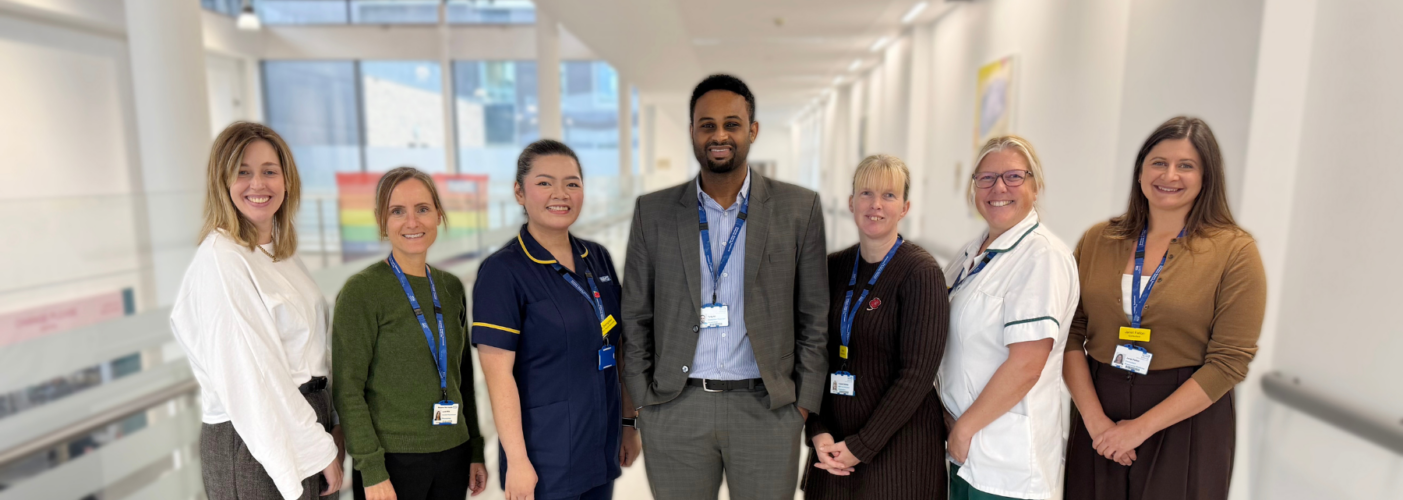
The team works closely with Dr Janet Fallon and Dr Tarig Ali, respiratory consultants specialising in interstitial lung disease, alongside Dr Kate Holyhead, consultant in palliative care, and occupational therapists from the supportive and palliative care team to provide holistic care tailored to what matters most to each patient.
Patients who would benefit from additional symptom support can be offered an appointment in the monthly ILD symptom control clinic, where they have dedicated time to discuss their symptoms, priorities and wishes.
The team may also visit patients in their own homes and support them when they are admitted to hospital, including helping to plan for their discharge.
Kelly Wilson, an occupational therapist in our supportive and palliative care team, says building long-term relationships with patients is an important part of the service.
“We get to know our patients over a number of years and will often have visited them at home,” she says. “That means we get to know them as people, and that knowledge can be particularly helpful when we are supporting their discharge from hospital.
“We set up the peer support group because our patients asked for it. Many told us they felt isolated and rarely had the opportunity to meet others living with the same condition. They also wanted to learn more about the support and services available to them and have opportunities to hear from healthcare professionals who could offer information, advice and guidance.
“When patients are in a room together, they learn from each other, and we learn from them too.”
The group is based at Burnham-on-Sea Community Hospital, where there is a large and welcoming space for the sessions. The location was chosen partly because many patients supported by the team live in the Sedgemoor area, meaning they do not need to travel to Musgrove Park Hospital to take part.
Each session lasts between two and three hours and begins with a welcome and an educational talk. Patients can help choose the subjects covered, giving them the opportunity to learn more about the issues that are most important to them.
This is followed by a physiotherapy session featuring seated exercises, time to talk and socialise over refreshments, and a relaxation activity at the end.
The team hopes the informal setting will help people share their experiences and build supportive relationships with others who understand some of the challenges of living with ILD.
“The social side is the part patients told us they wanted most,” adds Kelly. “We support and encourage conversation, but ultimately, it is about giving people the time and space to talk to each other.
“We’re describing it as a peer support group because we want patients to understand that it isn’t another clinical appointment. It’s an opportunity to socialise, share experiences and support one another.”
The first session received unanimously positive feedback through questionnaires completed before and after the meeting. A volunteer, Bronwen, also supports the sessions by helping with refreshments and making patients feel welcome.
In the longer term, the team hopes the group will develop links with Action for Pulmonary Fibrosis, a charity supporting people affected by pulmonary fibrosis.
The ambition is for patients eventually to take a greater role in running the group, with support from the charity and healthcare colleagues when needed. If the approach is successful, it could also be replicated in other parts of Somerset.
The next peer support group session is planned for Monday 30 November at Burnham-on-Sea Community Hospital. Attendance is arranged through the clinical team so that colleagues can ensure each session is suitable for the patient and their individual needs.