

Spotlight
Gastroenterology dietitian Mike explores new ways to support patients through research internship
A dietitian at the trust is helping shape the future of care for people with coeliac disease through a research internship focused on understanding what works best for patients.
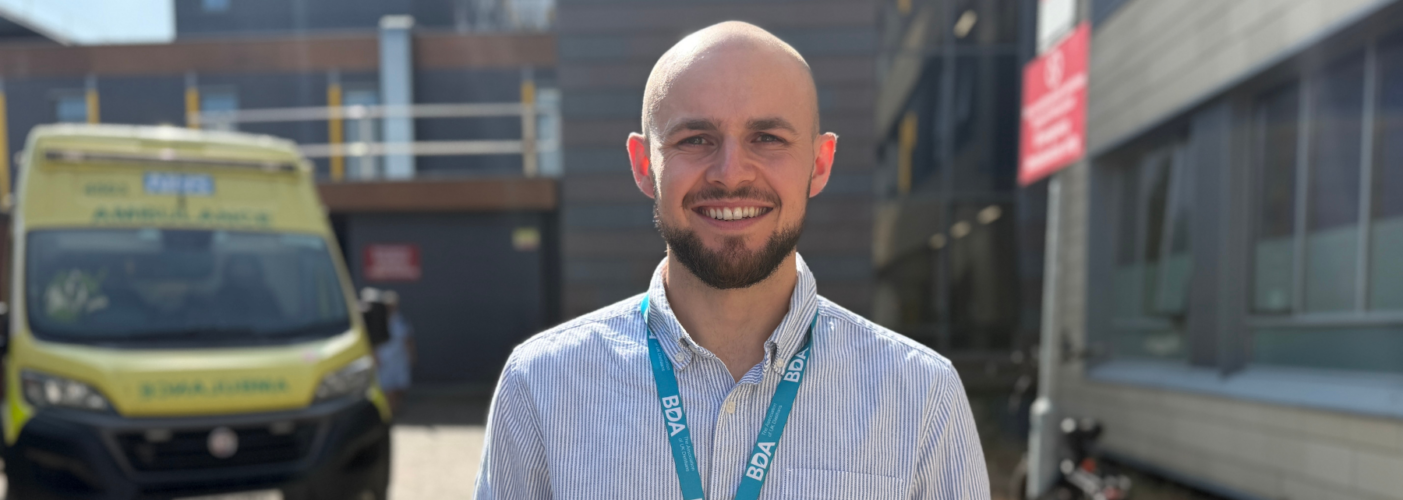
Mike Persey, a community gastroenterology dietitian, has spent the past year developing his research skills through a National Institute for Health and Care Research (NIHR) internship while continuing his clinical work supporting people living with digestive conditions.
As part of the internship, Mike has been evaluating a new virtual annual review pathway for patients with coeliac disease, exploring both how well patients engage with the service and their experiences of using it.
Coeliac disease is a lifelong autoimmune condition where eating gluten triggers the immune system to damage the lining of the small bowel, and managing the condition requires strict adherence to a gluten-free diet and ongoing support.
“One of the main areas we work in is coeliac disease, where we have a dietetic-led clinic supporting patients from diagnosis onwards,” says Mike.
“Traditionally, people have been offered annual follow-up appointments with a dietitian, but as the number of patients grew, we recognised we needed to explore different ways of providing that support while continuing to meet patients' needs.”
At the end of 2024, Mike's manager Leah Seamark led on the development of the virtual annual review pathway for patients who are managing their condition well and have a good understanding of a gluten-free diet.
The pathway includes a yearly self-assessment questionnaire, blood tests and self-management resources, with access to a dietitian when additional support is needed.
Mike's research has focused on understanding how patients engage with the new approach and whether it provides a positive experience.
“We've been looking at whether people complete their annual review and whether they need additional support from a dietitian afterwards,” he adds.
“A big part of the project has also been speaking directly to patients and hearing about their experiences.
“We might think something is working well, but when you sit down and talk to people you often gain a completely different perspective.”
Over the past six months, Mike has reviewed service data and carried out interviews with patients who have used the pathway.
“I've completed 10 interviews so far and they've been really interesting,” he says. “It's helped us understand what patients value, what's working well for them and where there may be opportunities to improve things further.”
The project comes at a time when there is limited research into the best long-term follow-up arrangements for people with coeliac disease, making patient feedback especially valuable.
Alongside evaluating existing data, Mike is exploring opportunities to gather feedback from a wider group of patients to help ensure future improvements reflect a broad range of experiences.
For Mike, the internship has also provided an opportunity to develop skills that will benefit future patients and services across Somerset.
“Before the internship, most of my time was spent focusing on clinical work,” he says. “Having dedicated time to undertake research has allowed me to develop new skills and look more closely at how we can improve services for patients.
“It's been a valuable opportunity to better understand what patients want from their follow-up care and how we can continue to provide support in a way that works well for them.”
Mike will continue analysing the findings over the coming months before producing a final report, with plans to share the learning more widely through publication in the South West Clinical School journal. He also plans to share the findings at the NIHR INSIGHT conference later this year.