
Spotlight
Father and daughter qualify as mental health nurses together
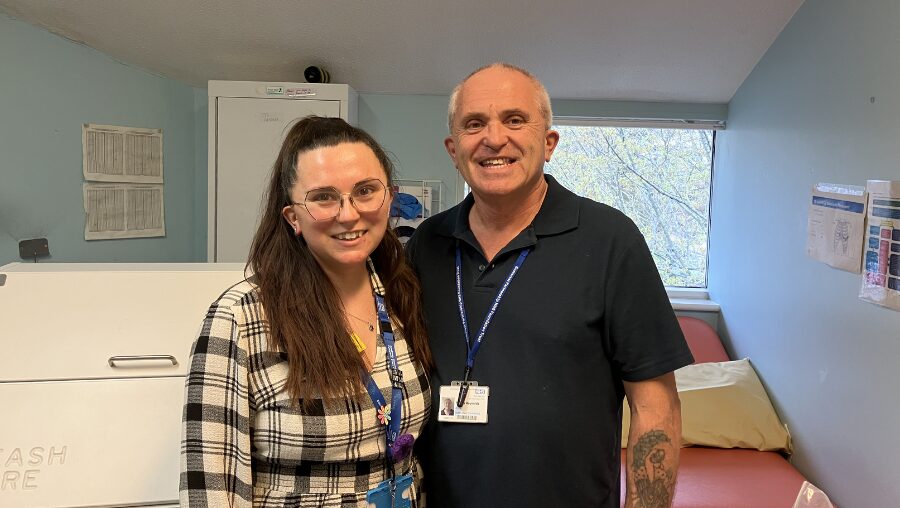
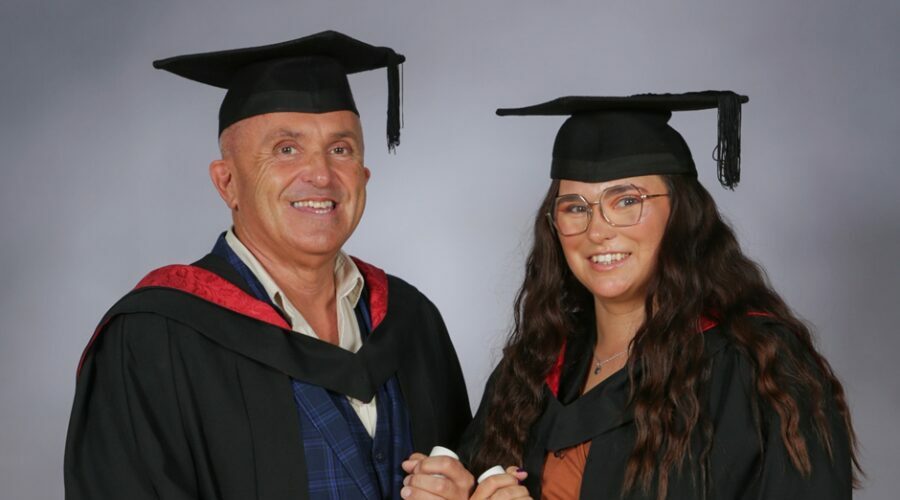
Simon Reynolds and his daughter Emily Franklin work as mental health nurses at Somerset NHS Foundation Trust, having qualified together in September last year.
Simon first joined the trust (in 2008) when he was 38 after various jobs in engineering and even a slaughterhouse. After being made redundant with three young children to provide for, he was encouraged by his sister who worked on Holford Ward – a psychiatric intensive care unit in Taunton – to apply for a bank staff position as a health care assistant.
He explained: “My sister inspired me to apply, I had never worked in care before at all, and looking back now, I wish I’d done it years ago. The same person that did my first interview for a HCA is now my boss as a community psychiatric nurse at 55, all my colleagues have been so supportive.”
Simon worked as a HCA for eight years before becoming an assistant practitioner, and after working on placement in different wards, he found his calling to work in the intensive dementia service before deciding to train towards his registered nurse degree apprenticeship with the University Centre Somerset, validated by University of West of England Bristol.
Studying alongside him was Emily, who is now 31 and working in the trust’s Child and Adolescent Mental Health Services (CAMHS) team as a community psychiatric nurse.
Emily explained “I joined the trust in 2020 on Rydon ward – a working-age adult mental health unit – as a health care assistant. Before that I’d worked in McDonalds, and then a nursery, but when Covid hit, I had to stop work as I have two young children. I found myself bored though, and wanted to work again.
“My dad had worked on the ward before, but I wasn’t sure about it at first. I applied for the HCA role and after working a couple shifts, I found that I really enjoyed it.
“I love the sense of helping people. I’d had no experience in mental health before then and I loved that just five minutes spent with someone struggling can make a massive difference to their day. I liked doing an intervention with someone or just talking to them and knowing that I was helping with their recovery.”
“I found it especially rewarding helping young adult residents of the ward and so when my apprenticeship finished, I decided to apply to the CAMHS team. I’m really enjoying it and have settled in really well in just a few weeks.”
She spent a year as a HCA, before becoming a trainee nurse associate on Rydon ward for two years. She then went straight onto a top-up course, which led her to starting her registered nurse degree apprenticeship alongside her dad.
Simon said: “I would recommend nursing as a career in the NHS to anyone. I am a really strong advocate for our national health service, and although people have asked me before whether I’d change to private healthcare, for me the NHS is the best place to be.”
Emily added: “I especially enjoy mental health nursing, as I feel that I’m learning every single day. If you enjoy learning about people, behaviours and how the mind works, and helping your patients learn with you, it’s a really rewarding career. I’ve not had lived experience in mental health, and it’s been so eye-opening and humbling.”
Having completed their studies together through an apprenticeship, Simon found it was a massive advantage to work alongside a younger cohort.
“Being in my forties starting formal education again was daunting as it had been a long time since I’d been in school,” he said. “But our whole cohort was so supportive and they really got me through it.
“I think we all had times where we thought we couldn’t do it, but we all encouraged each other. I think especially in mental health, we are very good at debriefing each other, if someone has had a difficult day you can talk to your colleagues and say how you feel.”
Asked on what studying with her dad was like, Emily said she found it really interesting. “We had around 50-60 of us in our cohort, but only 13 were for mental health nursing,” she said.
“As a TNA, it was harder as there weren’t any mental health nurses, so it was difficult to relate to.
“Being in the same class as mental health students was so supportive and it was nice to talk to people, especially being able to lean on them and ask questions.
“Having my dad with me meant that we could get together to brainstorm and study with our peers for assignments. We both helped each other through!”
“An apprenticeship route gives you an upper hand, because you have a base to learn from, as well as a placement and support from your manager all along the way.
“It means that I don’t have debt from studying, as it was paid by the trust, and I was getting a wage too.
“Me and dad have a really strong friendship group all going through the same thing, and I can’t imagine not having that.”
Simon added: “It’s given another level of understanding to our relationship, we were very close anyway but doing this together has brought us even closer.”