

Spotlight
How research helped Ivy manage breathlessness at home
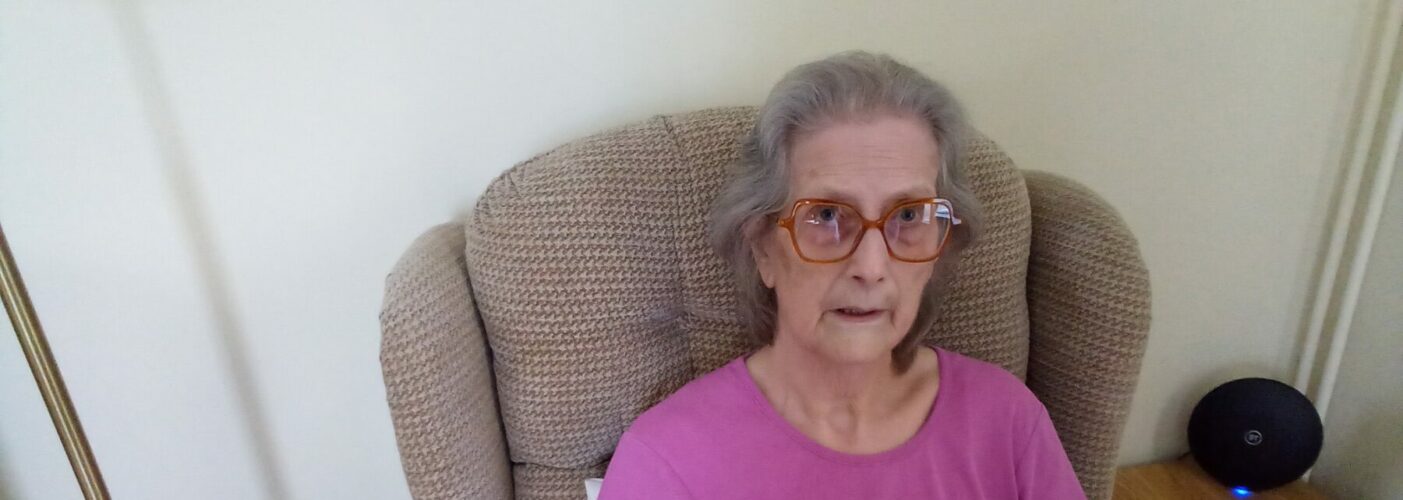
When 80‑year‑old Ivy Durn agreed to join a research study testing a digital online portal for people living with chronic breathlessness, she hoped it might help a little.
She didn’t expect it to transform how she copes with frightening episodes or give her the confidence to manage her condition safely at home.
Ivy took part in the SELF‑BREATHE study after being approached during an appointment at Musgrove Park Hospital.
The study, supported by the National Institute for Health and Care Research’s (NIHR) Research Delivery Network, is exploring whether a digital self‑management programme can help people recognise and respond to breathlessness before it escalates.
For Ivy, the change has been remarkable. “I don’t feel helpless anymore,” she says. “It’s about gaining control again.”
Ivy lives in sheltered housing in North Somerset with her husband of 60 years, David. She once loved long walks and trips across the UK, and while arthritis, Sjögren’s syndrome and fatigue now limit her mobility, she still enjoys cooking and reading on her Kindle.
But severe breathlessness remains a constant challenge – episodes that can happen weekly, and which have left her terrified.
“The last time I had a big episode, I thought I was going to die,” she says. “The more you fight it, the worse it gets. I’ve even had to give up singing in church, something that once brought me joy.”
When Ivy was invited to try the SELF‑BREATHE portal, she didn’t hesitate. “I’ve always believed in research,” she says. “We wouldn’t have any medicine without it. I like to do my bit.”
Through the portal’s short videos, breathing exercises, and simple symptom‑tracking tools, she has learned to recognise early warning signs and act quickly.
“When it starts, I know what to do, as the exercises bring me down and help me concentrate,” she explains. “Being able to manage it at home is a thousand times better.”
She now feels more in control, intervening early rather than spiralling into panic. What once felt like a crisis requiring urgent care is now something she can manage with confidence.
“Prevention is the way to go,” she says. “If they’d told me about this 10 years ago, I would have kissed their hand.”
Despite assumptions about older people and technology, Ivy has found the intervention easy to use.
“It’s very straightforward,” she says. “The knowledge is key. It empowers me.”
For colleagues running the study locally, Ivy’s experience is echoed across Somerset.
Sarah Board, senior research nurse team lead at Yeovil Hospital, says the study has been hugely valuable.
“Some participants have told us the intervention greatly helps them by giving them greater control over managing their symptoms independently,” she explains.
“Feedback has been overwhelmingly positive, with reduced anxiety, improved confidence, and a real sense of autonomy. People have found the portal extremely easy to use and simple to build into their daily routine.”
Dawn Redwood, clinical research nurse for respiratory, rheumatology and dermatology at Musgrove Park Hospital, says the response from patients has been exceptional.
“This randomised controlled trial is looking at whether using an online breathlessness self‑management programme for six weeks, alongside usual NHS care, can improve symptoms for people with advanced conditions,” she says.
“Musgrove Park is the highest‑recruiting site in the country, with 49 patients taking part, and many, like Ivy, have told us how beneficial it is to use at home, in their own time.
“With services like pulmonary rehab often stretched, offering an alternative that supports independence and control has been brilliant.”
Dawn adds that the research team at Musgrove – herself, Tania Wainwright and Jo Tilley – have been delighted to see so many people in Somerset eager to take part.
“It has been a pleasure to be involved, and wonderful to see people finding something that genuinely improves their lives,” she adds.
Ivy has taken part in research before and says she would do so again in a heartbeat. “Don’t be frightened to take part,” she says. “People can be ageist, but we have a right to be heard. Everyone’s opinion matters.”
Through the study, she has gained practical breathing techniques, reassurance and renewed confidence. “It’s that feeling of not being helpless anymore,” she says.