


Spotlight
Nurse project focuses on improving electronic charting in critical care units
One of our critical care nurses is leading a project to understand how effectively colleagues are using electronic patient records – and where further training could improve care.
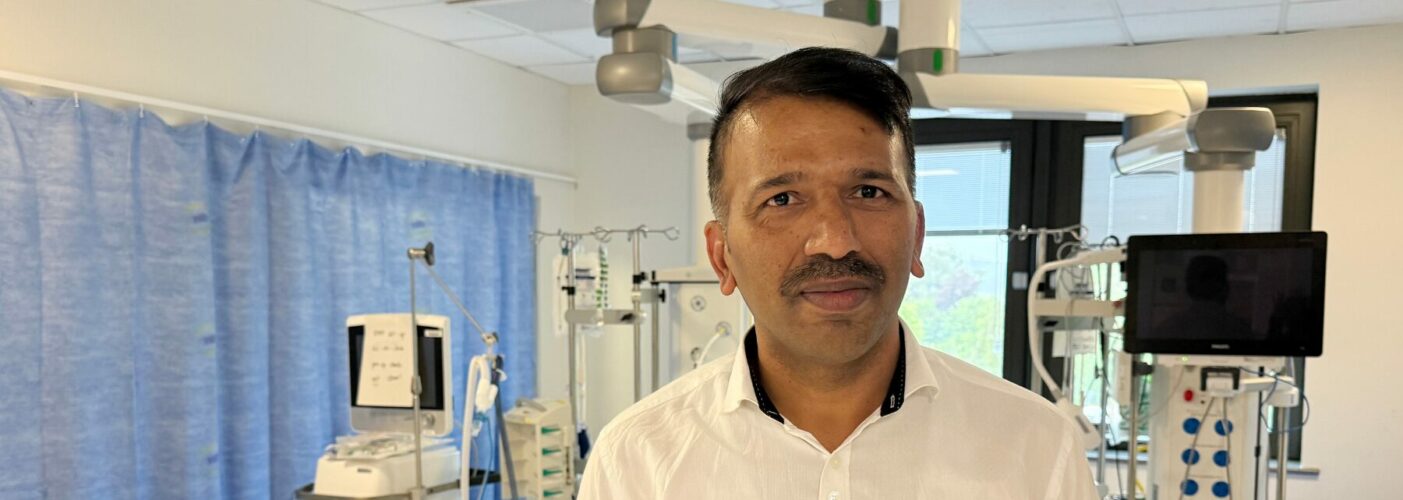
Dayananda Omkarappa, who works in the critical care unit at Yeovil Hospital, is carrying out the project as part of the Chief Nurse Research Fellowship.
Originally from southern India, Dayananda has more than 15 years’ experience in nursing and joined the NHS during the COVID-19 pandemic.
He has worked in critical care for almost three years, where a new electronic charting system was introduced to support patient care.
“Three months before I joined the fellowship, our critical care unit began using electronic charting, and of course this took some time for colleagues to get used to at first with it being new,” Dayananda says.
His project focuses on evaluating how well colleagues are using the system and identifying areas where additional support or training may be needed.
Dayananda continues: “My project is about evaluating how well colleagues are using the system, and in which areas they need any education.
“Electronic charting plays a vital role in critical care, allowing teams to closely monitor patients’ conditions and respond quickly to changes.
“It’s very important in patient care as it helps us to track the progress of patients and whether they are ready to be removed from the ventilator, for example, and all of this documentation is crucial.”
He focused his initial audit on respiratory data, a key area in intensive care where accurate recording is essential for managing patients’ airways and treatment.
“There are different parameters in the system, and I decided to look at the respiratory parameter because in critical care units we inject for airway management,” he says.
“The findings showed that most colleagues were using the system accurately, but also highlighted specific areas where improvements could be made.
“When I carried out auditing, most colleagues were found to be carrying out the charting accurately, with only a few areas struggling, and that has been really useful for our department to know who needs educating on it.”
The results are already helping to shape practice on the unit, with learning points being shared as part of regular handovers.
“Usually when we start our shift we will do an electronic handover, and during that time we highlight where colleagues need to focus on,” he says.
“Research shows that electronic health records can improve patient safety and reduce errors in intensive care settings, while also freeing up time for direct patient care.”
Dayananda added that he hopes his project will continue to support colleagues and strengthen patient care as the system becomes embedded in everyday practice.
“I think my project has gone very well. It’s really helped us understand how we are using the system and where we can continue to improve.”