


Spotlight
Theatre nurse leads project into readiness for robotic surgery
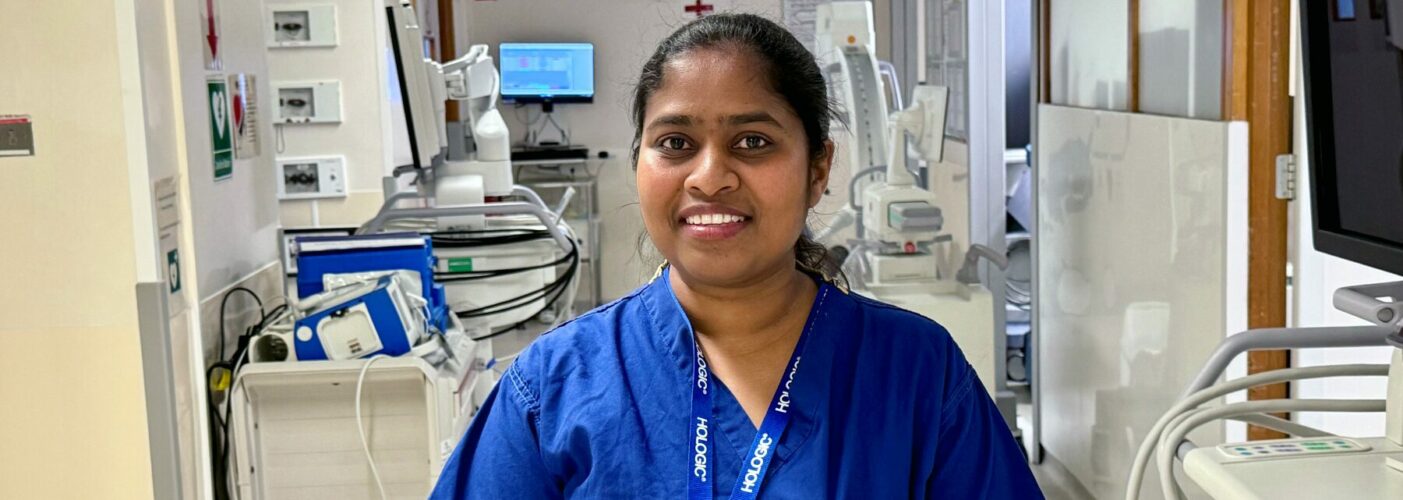
A theatre nurse at Yeovil District Hospital is leading a new project into how well colleagues are equipped to work with surgical robots, as the NHS looks to expand their use in the years ahead.
Sandhya Puli, a scrub nurse with more than a decade of experience, is assessing the skills, knowledge and confidence of colleagues working in operating theatres as part of the Chief Nurse Research Fellowship.
Her early findings suggest that while robotic surgery is becoming more common, not all theatre teams feel fully trained or prepared to support it.
“I moved to Yeovil in October 2019 and I began working in the main theatres at Yeovil Hospital, where I’ve been working ever since,” she says. “I’m a scrub nurse and I have 10 years’ experience.
“My Chief Nurse Research Fellowship project is all about robotic surgeries. I’m focusing on our nursing colleagues, operating department practitioners and healthcare assistants to assess their skills, knowledge and experience.”
Robotic surgery is increasingly being used across the NHS, particularly for complex and cancer procedures, as it can offer more precision, smaller incisions and quicker recovery times for patients.
But Sandhya says it also brings new challenges for theatre teams. “There are a lot of things involved, such as moving and setting up the robot, and in the case of an emergency we have to handle it,” she says.
“My point is all about how much experience and exposure colleagues have, and how much training we have received in assisting the surgeons for robotic surgery.”
So far, her project has included interviews with colleagues as well as a wider survey, which has already attracted around 50 responses.
“I have been collecting the data reported from all our colleagues, where I carried out half a dozen interviews and I sent out a survey,” she says.
“There is always a chance that as colleagues work in different theatres, such as gynae, robotic, orthopaedic and vascular teams, that irrespective of that it’s necessary for all of us to be trained because we may easily rotate across theatres,” she says.
Sandhya says her project is closely aligned with the NHS’s long-term direction of travel, as services increasingly adopt new technology.
“I’m trying to understand the necessity of all colleagues to be trained on the robot, as the NHS 10-year plan’s analogue-to-digital shift also includes robotic surgery,” she says.
“The aim of the plan is to do most surgeries via robotics, especially cancer surgery and those that have longer waiting times.”
She believes ensuring theatre teams are fully trained will be key to making that ambition a success. “For a surgeon to work well, or for surgery to be successful, the whole team need to be trained,” she says.
“I’m trying to get the data on the extent everyone is trained and what other training is necessary to improve their knowledge and give the best experience, not only for the surgeons but also for the patients.”
Sandhya’s passion for research began during her training in India, where she studied malaria in her local community – an experience that continues to shape her approach today.
“Research has always been my area of interest, and is very much my passion,” she says.
“As a student nurse during my BSc, we carried out a community-based study on malaria incidence, which has been a great motivation for me ever since.
“I believe research is a huge benefit to healthcare, helping to develop practices and provide excellent care to patients and the wider community.”
She says taking part in the fellowship has given her the opportunity to build on those foundations and develop new skills in data collection and analysis.
“The fellowship has provided me with an opportunity to develop myself on how to carry out project, how to analyse results, and how to do data collection,” Sandhya says.
“I think clinical research is very essential, and sometimes we misunderstand it as being purely economic, but it’s also about improving clinical practice.”
Once her analysis is complete, Sandhya plans to share her findings with colleagues and senior leaders to help shape future training.
“Now I have collected the data, I’m at the stage of analysing what I’ve heard,” she says. “I will then publish my results and present them to the theatres team, and hopefully to the surgical board.
“From there we can see what training plans we can introduce to equip colleagues for better provision of care.”
Looking ahead, she believes robotics will play a central role in the future of surgery, and wants to ensure colleagues are ready.
“I definitely think that robotics are the future,” she says. “It’s essential for everyone to know how to deal with robots, and especially how to deal with any problems and solve them.
“I think my project will provide more opportunities for nurses, operating department practitioners and healthcare assistants to get trained more and to be up to date with future practice.”