

Spotlight
Spotlight on Wellington Community Hospital
In 1891 Queen Victoria entered her 53rd year on the throne, new Prime Minister Lord Salisbury headed up the government, and the Great Blizzard caused widespread disruption across Somerset.
In that same year, the foundation stone was laid at Wellington District Cottage Hospital, with the hospital officially presented to the town by local clothing manufacturer Egerton Burnett a year later – on 21 June 1892 – costing £1,200!
Many healthcare services have utilised Wellington Hospital over the years – from maternity birthing units and outpatient services, to inpatient wards and dementia care…and more!
Fast forward to 2025 and the hospital is home to over 35 different specialties that run outpatient and diagnostic clinics for hundreds of patients every week.
Wellington has a population of 16,700 people, with 27,220 in the surrounding area, including Wiveliscombe. Of those, 26.3% are 65 and over – higher than the Somerset average of 24.8%.
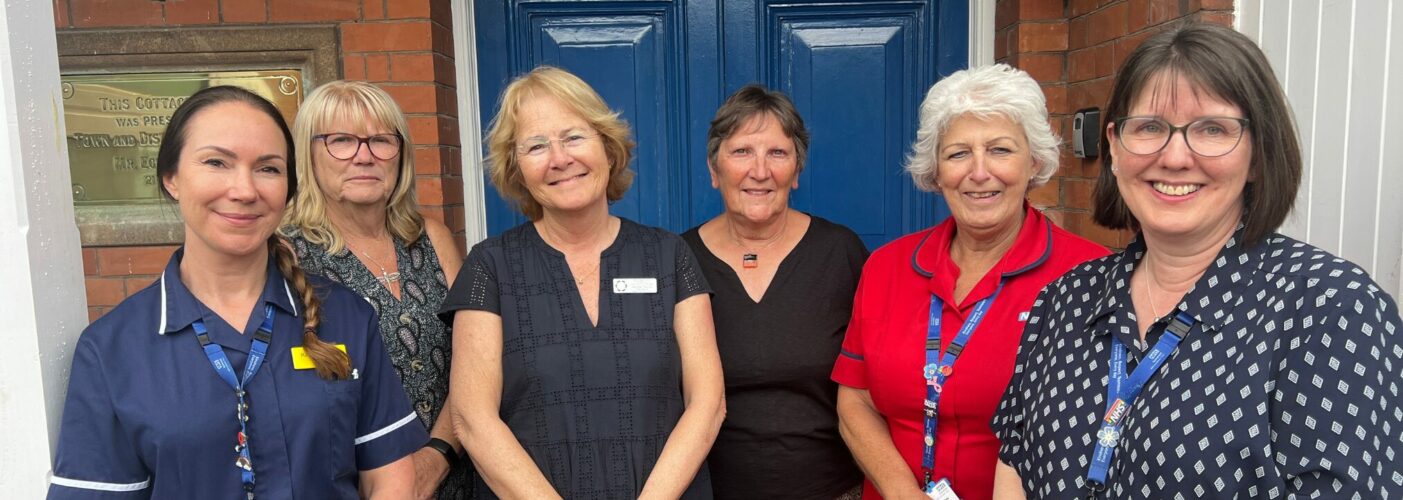
This summer we spoke to a few of the teams and colleagues who provide services from Wellington Hospital for the local community.
Lead outpatient nurse Kate Henbest has been working at the hospital for two and a half years, having moved from London, although she tells how her local links mean the hospital has always been close to her heart.
“I have such fond memories of this hospital whilst growing up in Wellington, so to be able to come here to work was a fantastic opportunity that I simply couldn’t turn down,” she says.
“My job involves coordinating and running all the existing clinics in the outpatient department and bringing in new ones too. I also oversee some of the renovation work that’s happened to make the clinics possible, and of course I liaise with our incredibly supportive League of Friends.
“Since I’ve joined, we have introduced many more outpatient and diagnostic clinics, and my ultimate goal is to utilise every single square inch of the hospital for the purpose of the local and wider community.
“Utilising this 134-year-old building, with such a rich history, for the wider community, from pre-birth checks all the way up to audiology, eye screening and cancer services, is fantastic!”
“I absolutely love working here, and we have such an amazing team, including two dedicated healthcare assistants, Cheryl Keogan and Susan Harding, and a very conscientious housekeeping team.
“We are also so fortunate to have the guidance and support of our senior matron, Norma Coombes, who oversees our hospital, as well as the community hospitals in Minehead and Burnham-on-Sea.
“We are all incredibly passionate about delivering the best possible experience for our patients and the feedback we get is that they’re really happy with the services we provide. Being able to offer treatments such as chemotherapy, is an absolute game-changer for people, who no longer need to travel into Taunton for it.
“We run so many clinics now – far too many to list right now (you can see a full list on the Somerset FT website) – and it’s having a massively positive impact on people in the community.”
Norma adds: “I feel that we’ve been really forward thinking at Wellington Hospital as we’re already one step ahead of the new NHS 10 Year Plan in making our hospital a local health hub that can support the health needs of the local community. I feel we are now a real asset to the local community.”
Kate took us on a tour of the hospital where we met a wide selection of colleagues, who run the many different services from Wellington.
You can see Kate's tour, and find out more about her role at Wellington Hospital by watching the videos below.
Services at Wellington Community Hospital
 Community midwifery
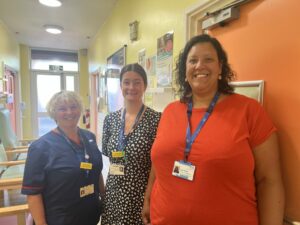
Turn right at reception and you reach the first stop – our team of community midwives who offer a range of different appointments from the hospital – and they also use the on-site Stratfield House as their administrative base too.
Sarah Ross, a maternity support worker who began working at the hospital during the COVID-19 pandemic, explains the type of care available to new mums and parents from Wellington Hospital.
“We offer antenatal appointments for pregnant women and birthing people, as well as postnatal checks for when they’ve had their baby and have been discharged from hospital – the latter of which I tend to do as part of my role,” she says.
“In total we have four midwives working out of Wellington Hospital, and we run at least one clinic every day, which tends to see 12 people.
“In my role, I also carry out postnatal visits at home, and while that very much varies on the number of women and birthing people discharged, it could involve up to eight visits in a day!
“I think it’s great to be able to provide this service locally to families in Wellington and the surrounding areas, the feedback I get is that they feel well supported with having the service close to them. Our midwives also run a caseload for our GP colleagues in Wiveliscombe and Norton Fitzwarren, so those families come here too.
“I really enjoy working at Wellington Hospital, especially having other teams close by – it’s a real community feel!”
 District nurse ambulatory care
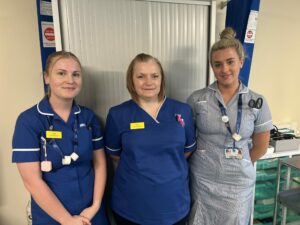
Wander down the corridor and we come across our district nurse ambulatory care team, which runs seven days a week.
District nurse Amy Rodger explains what the team does. “We see around 10 people a day in our clinics for treatments such as PICC lines, catheter changes, and dressings – all of which aren’t routinely done at the local GP practices,” she says.
“We often see patients as they’re waiting for an appointment with the leg ulcer clinic or tissue viability nurse.
“And we’ve also recently started to offer chemotherapy pump disconnects, so patients don’t need to travel into Musgrove for this service.
“Patients can often get same day clinic appointments at Wellington Hospital, so if they have a problem with their catheter, or something like that, then they can come here. Outside the clinic times, a district nurse will usually visit them at home.
“We have great support from other nurses in the building too, and although they don’t directly work for our service, they still have knowledge in certain areas that we can draw from.
“This works especially well on a Tuesday and Thursday when the Beacon Centre’s chemotherapy service runs from the hospital, because we can often tap into each other’s expertise, as well as our continence service colleagues for things like catheter care.
“Seeing our other nursing colleagues face-to-face rather than trying to communicate over email is always helpful too, and that’s certainly what we have here.
“It’s great that we’re able to provide this service here in Wellington, as it’s more convenient for everyone. We also provide similar clinics out of the community hospitals in Bridgwater and Williton, saving people from having to travel so far.”
 Chemotherapy
It’s the chemotherapy service Amy mentioned that’s the next service we visit – which is ideally situated in the clinic room opposite.
According to Somerset Council health profiles, there is a higher prevalence of cancer in the Wellington and Wiveliscombe area (5.63%), compared with the Somerset average (5.16%).
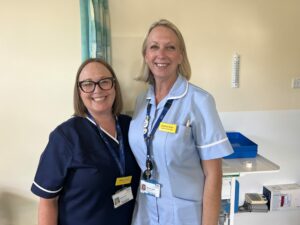
Specialist nurse Sarah Dunn and senior healthcare assistant Melanie Suter are the team on shift, although other colleagues from the Musgrove Park Hospital’s Beacon Day Unit also rotate in to work at Wellington.
Sarah explains: “At our chemotherapy treatment clinic we always have a specialist nurse and a healthcare assistant who has an extended role, such as administering PICC lines, echocardiograms, and cannulas.
“Previously all chemotherapy treatment was solely run from Taunton, but as the service grew it simply became too big for Musgrove, so we needed to think differently.
“We therefore decided to offer treatment from the community hospitals in Bridgwater, Williton and here at Wellington, where we run clinics twice a week.
“By going out to these satellite clinics, like Wellington, we’re not only easing pressure on the service at Musgrove, but we’re also bringing treatment closer to the patient, which has to be a good thing for them.
“We offer all the different types of chemotherapy here, including blood transfusions, non-cancerous venous sections, scalp cooling – the full set list that we provide at Musgrove.
“The number of patients we see in a day very much depends on their level of treatment, but we’ve been known to see 18 patients in a single day before!
“We benefit greatly from working together with other services within the hospital, as today for example, one of the patients being seen by the district nurses had a problem with their PICC line, so we were able to use our expertise and step in to help.
“Once we had a patient come in with a nasty looking wound on their leg, and our district nursing colleagues were able to pop across the corridor and give a second opinion, which avoiding the patient from needing to go back into Musgrove.
“We really enjoy working here, purely because it’s not so big as Musgrove, so whenever we have a patient in, we can literally be with them all the time…and the patients appreciate that too. We only have four treatment chairs here, so quite often patients talk to each other, and it just feels like really great all round personalised care.”
 Stroke care follow-ups
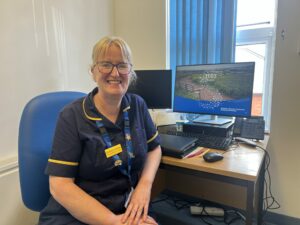
We then take a trip across the other side of the hospital, where specialist stroke nurse Rebecca Larkham explains what stroke care is available locally from Wellington.
“We provide a six-week stroke-follow up care service from Wellington, for those patients who live locally and have been discharged home from Musgrove Park or Yeovil hospitals following a stroke,” she says. “It could also be that they’ve had a period of care at our community stroke rehabilitation units at South Petherton or Williton hospitals.
The service began in autumn 2024 and we run one clinic a week – every Thursday – so we alternate which colleague in our team is here, and we generally see four patients a session.
“I think it’s lovely for patients who live in Wellington and it’s so much easier to park here with a pay and display opposite.
“We are also looking at whether we can provide some further outpatient clinics here, but that’s one for the future.
“I love it here and it takes me back to when I did my training a couple of years ago (1987 she whispers!) and working as a student nurse in a community hospital elsewhere in Somerset. The whole feel of the building, really takes me back.”
 Musculoskeletal (MSK) physiotherapy
Around the corner from the stroke clinics, you can find the hospital’s physiotherapy department, complete with a small gym where patients can undergo set exercises.
According to Somerset Council health profiles, there is a higher prevalence of MSK conditions in the Wellington and Wiveliscombe area (3.5%), compared with the Somerset average (2.5%).
Wellington Hospital’s League of Friends paid for an internal wall to be removed in the department, as well as funding a great amount of equipment.
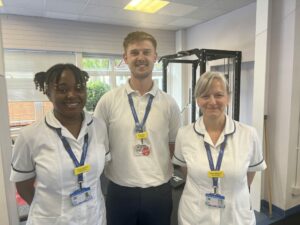
MSK physiotherapy team lead for the Taunton area, Helen Williams, is at the hospital on this day, covering for her colleague and usual team lead at Wellington, Faye Goodwin, who’s taken some well-earned annual leave.
“We have a physiotherapist based out of Wellington Hospital every day, along with one or two clinicians,” says Helen. “In total we tend to run around 20 sessions a week, with each physiotherapist having a full diary.
“Local physiotherapy is so important, and our patients tend to be referred into us either by their GP or by our colleagues at Musgrove Park Hospital.
“To come somewhere local, where they know their way around and don’t have very far to travel, really enhances their experience, with the calmer environment hopefully having a positive effect on their condition.
“Overall, I think Wellington Hospital has a really chilled vibe, and is quite peaceful and calm, with a real community feel.”
 Audiology
Another service that has spread across to Wellington Hospital from Musgrove in recent years is audiology. The department boasts 2 state of the art audiology booths and full screening equipment.
The hospital’s League of Friends funded the internal alterations to the building to make it possible for the audiology clinics to run.
Christine du Plessis, an audiologist and clinical scientist, explains what the service does. “As an audiology department, we provide a range of diagnostic and rehabilitative services for adults with hearing and balance difficulties,” she says.
“This includes balance assessments, hearing assessments, hearing aid fittings and maintenance/repairs, as well as ongoing follow-up care and support.
“Our aim is to help patients manage hearing loss effectively and enhance their overall quality of life, and we work closely with our ear, nose and throat (ENT) colleagues to ensure a holistic, patient-centred approach to care.
“At Wellington Hospital, we typically run around 12 clinics a week and see approximately 50 patients. Our clinics cover everything from initial assessments, to hearing aid reviews and fittings.
“Having an audiology service based at Wellington Hospital is incredibly valuable, as it offers local access to hearing healthcare for patients who might otherwise have to travel further afield.
“The location is well-served by public transport, making it especially convenient for patients who don’t drive.
“Overall, it’s a really positive experience and I find that colleagues across the hospital are consistently described as friendly, helpful, and welcoming, which contributes to a supportive working environment. There’s a lovely atmosphere across the hospital, and many find it to be a peaceful and pleasant place to work.
We’re proud to be part of a service that helps improve people’s everyday lives through better hearing. Having a local base at Wellington Hospital strengthens our ability to serve the community with accessibility and continuity.”
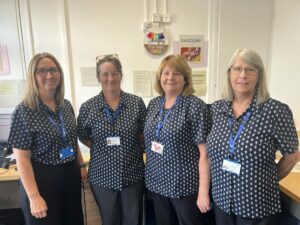
It’s not only the clinical audiology service that’s at Wellington Hospital, but also the entire administration office, which recently relocated from Musgrove.
Admin team leader Sandra Bartlett says: “We’ve recently moved our administration hub from Musgrove Park to Wellington Hospital and so far, it has been a real hit with colleagues.”
Tracy Mitchell, an admin assistant in the team, adds: “I joined the team at the end of January this year, and I’ve found the team to be so lovely and extremely helpful in showing me the ropes!”
And Deborah Attridge says: “I moved here at the same time as Sandra, and I’m impressed with how big our office is. I find the whole hospital to be a really friendly place.”
 Ultrasound
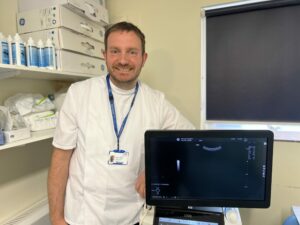
Walk up the old staircase and you’ll find another set of clinic rooms, the first of which is an ultrasound service that supports many of the different specialties.
Specialist radiographer, James Harris, explains: “We cover a whole range of diagnostic tests for patients in the area, from musculoskeletal and rheumatology (pictured below right), to post-menopausal bleeding, and more.
“We also support with obstetric clinics one morning every week, which is run by Dr Timothy Shepherd – an obstetrician/gynaecologist.
“Every Monday and Thursday afternoon we have a post-menopausal bleeding clinic with Dr Claire Jennings. This afternoon, for example, I’m scanning 10 post-menopausal bleeding patients, in the morning I saw another 10, so we’re generally scanning around 20-25 patients per day.
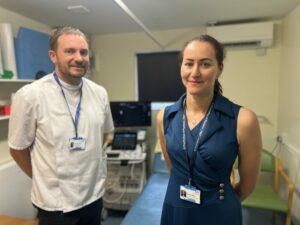 “It’s fantastic that we have an ultrasound service here and can run so many clinics, as it has not only increased our general capacity, but is also nothing but beneficial to the local population.
“I actually first began working at Wellington Hospital almost 20 years ago and I find that the team are really lovely here. It’s definitely one of my favourite community hospitals to come and visit – don’t tell the others I said that though!”
Post-menopausal bleeding clinic
Just before her shift began, we spoke to Dr Claire Jennings, a former GP in Wellington, who runs the post-menopausal bleeding clinic at the hospital.
The post-menopausal bleeding service in Somerset was hailed as a game-changer for those experiencing bleeding after they’ve reached menopause.
Before the service was introduced, patients had to wait around 63 days to be seen by a hospital specialist, and then a possible wait of up to 48 days for a cancer diagnosis.
Thanks to the new service, the wait to see a specialist has reduced to just six days, and patients are getting a cancer diagnosis within 11 days of the referral.
“The idea of our service is that women who experience bleeding after the menopause could self-refer themselves to cut down the time they’d need to wait – avoiding the need to speak to a GP first,” says Claire.
“I run two clinics a week at Wellington Hospital, and I tend to see around six patients in each clinic. At their appointment, patients have a scan, consultation, examination and biopsy all on the same day if they need it.
“I love working here and as it’s so small, I tend to see a lot of people I know, both colleagues and patients, as I was a GP in Wellington for a long time.”
Other colleagues at the hospital
As we toured the hospital, we bumped into three other colleagues who play a vital role in keeping the Wellington Hospital running.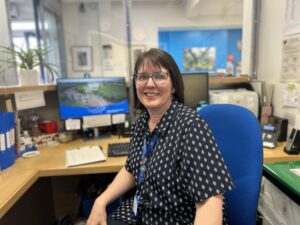
In fact, the first face you’re likely to see when you enter Wellington Hospital is friendly receptionist Rachel White.
“I’m stationed at the front of house and greet patients as they come in, advising where they should go for their appointments and any other queries they may have,” she says. “I also deal with the main telephone line into the hospital.
“I absolutely love working here, and we have a great team – more like a family in many ways – a super place to work.”
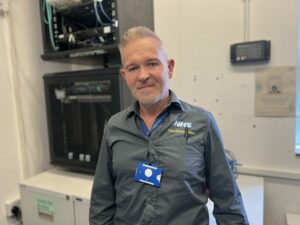 Pete Coombes is the facilities team lead for both Wellington and Dene Barton hospitals. “My role is to manage the housekeeping team, so we provide an excellent standard of cleanliness,” he says.
“I think with any healthcare organisation department it’s important that we have an environment that’s safe and clean for visitors and patients, and our team. It’s a really nice and friendly team here in Wellington.”
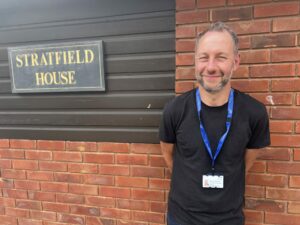 Matt Whisker is an electrical technician and supervisor for our estates team. “I look after the electrics across all of our community hospitals in Somerset, including Wellington,” he says.
“Part of this involves looking at how we can make best environmental use of our heating systems, as well as the usual day-to-day tasks.
“Having the hospital here in Wellington makes it so much easier for people to access healthcare, as it’s more flexible and the space really has been put to good use. It’s a great place to work, and everyone really comes together as one team.”
The Wellington Hospital League of Friends
At the end of the hospital tour, we sat down with three representatives of the Wellington Hospital League of Friends – chair Martine Thurtle, vice chair Sue Alderman, and press officer Diane Grabham.
Martine explains the vital role played by the ‘Friends, both now and over the years. “We look to support the hospital, firstly by raising funds, and then by working with hospital management and community healthcare teams to provide things that would support the patients,” she says.
“We will do everything we can to support Norma (the hospital matron) and Kate (lead outpatients nurse), so whatever the clinics need, we hope to be able to help, and we always welcome hospital teams coming to us with ideas of what we could fund.
“That could be equipment you can touch, help with some structural things within the building, or items for our district nurse team to take out to home visits.
“The breadth and depth of services here is excellent, especially with staff in each clinic being able to link with other clinics.
“It’s particularly pleasing that we can support a wider age range of people – from pre-birth all the way up to older age.”
Sue adds: “The hospital has changed tremendously, with an incredible number of clinics coming into Wellington in recent years for the local community to use.
“In many ways it feels like we see more patients from within the local area at the hospital than ever before, which is fantastic.
“The feedback we’ve been getting from people in the community about the services run at the hospital has been largely positive, and I think people are grateful that we have the facility here.
“We certainly demonstrated the value of it during the COVID-19 pandemic, when people could come and get their vaccination, and it really seems to have built from there.
“In fact, a lot of the people who came here for their vaccination didn’t even know there was a hospital in the town, and as new clinics have been introduced, they’ve been really impressed.”
Diane adds that fears over the future of Wellington Hospital following the temporary closure of the inpatient beds in 2020 are wide of the mark.
“While we know the hospital doesn’t have any inpatient beds, that absolutely doesn’t mean the hospital is closing,” she says.
“It’s actually fantastic to see this different way of bringing healthcare to our community, rather than people having to go to a larger hospital like Musgrove Park.
“As a League of Friends, we’re determined to get the message out to people in the community about what Wellington Hospital can offer, especially for those who are new to the town, rather than them assuming that they need to travel into Musgrove for their healthcare needs.”
Find out more
If you’d like to find out more about Wellington Hospital and all the services it provides, head to the Somerset FT community hospitals page.
Wider non-hospital services available in Wellington and the surrounding area
Pain cafe
A team of health coaches run a monthly pain café from Wellington Hospital on the following dates: 13 November, 22 January, 26 February, 26 March – from 1:30pm – 3:00pm.

The café is an informal gathering that gives people with conditions that cause long term pain an opportunity to chat through their experience, and also share practical self-management tips with each other.
Services run by the Somerset Activity and Sports Partnership (SASP)

Enhanced Access
Enhanced Access is for patients at Wellington Medical Centre and Lister House Surgery. It’s a free community-based programme to help improve and maintain health. This programme is ideal for those managing weight, long-term conditions, or diabetes risk.
Run by qualified exercise professionals at Wellington Leisure Centre, this service offers free Saturday leisure access and structured support for lasting lifestyle changes. Patients can access swimming, supervised gym sessions, and classes via a set timetable. Courses like ‘Fit for Life’ ran in Sept 2025, with 75% of participants boosting activity over six weeks.
ProActive
ProActive (https://proactivesomerset.co.uk/) Physical Activity on Referral helps Somerset residents with health conditions improve overall health, manage symptoms, and achieve rehab goals. It uses targeted exercises prescribed by qualified Exercise on Referral professionals.
Wellington and nearby residents can take the 12-week course at Wivey Gym or Wellington Medical Centre, with referrals from GPs or health coaches.
Somerset Health Walks
Somerset Health Walks in Wellington offer friendly, supportive ways to get active and connect. Walks run Mondays and Thursdays with Level 1 or Level 3 options from various Wellington locations. A beginner walk runs Wednesdays in Wiveliscombe for confidence building. Most walks end with a chat and hot drink in a local café to strengthen social ties.
Unbreakable Men
Unbreakable Men promotes men’s physical and mental health across Somerset with Open Mental Health. Wellington hosts an in-person session Tuesdays, 2–3pm at Spartan Gym. Sessions offer light-hearted physical activity and a safe space to connect and share. Extras include an interactive manual, mental health MOT app, monthly online session, Facebook and WhatsApp groups.
Move 2 Independence
Move 2 Independence helps people live well at home after hospital discharge. Developed by SASP, it promotes movement for health and happiness in partnership with Somerset hospitals.
SASP provides home movement visits and adaptable activity resources for various post-hospital conditions. Participants control how they use the service; all options are low-impact, varied, and enjoyable!
Last year, 97% met or progressed toward goals, with fear of falling down 32%.
Health coaching service
SASP Health and Wellbeing Coaching helps people with long-term conditions access physical activity to improve health. If you have a long-term condition, diabetes risk, or want to take control, our coaches can support you.
Available to anyone registered with these GP practices:
• Wellington Medical Centre
• Lister House Surgery
Your coach will consider your health and ability to help add movement and social activities to your lifestyle. Access fun, affordable activities to boost confidence and build a healthy future.
Women’s MenoFit with In It Together Women’s Programme
In 2025, MenoFit courses supported Wellington women. 6-week courses focus on strength, activity, and weekly menopause topics in a supportive space. Follow In It Together on Facebook for 2026 courses. For more information, please visit SASP - In It Together.