

Spotlight
Development of a test and learn in Burnham-on-Sea and Crewkerne
We are in the early stages of developing a test and learn process at Burnham-on-Sea War Memorial Hospital and Crewkerne Community Hospital that we plan to start in April 2026. We have lots more work to do but we wanted to share our thoughts as early as possible.
Based on what we heard as part of our engagement with people in Somerset, and an analysis of the population health and needs of people in those areas, we want to test whether we can improve local people’s access to services and provide inpatient care by temporarily reducing the number of beds in both hospitals from 16 to 8 and using the vacated space to provide more services.
Through our engagement with the local communities in Burnham-on-Sea and Crewkerne we have heard how people would value these new additional local services but are also concerned not to lose their local community hospital beds. This would retain beds in both community hospitals and provide additional services in both locations. Any changes will be temporary and no decisions have been made to permanently close community hospital beds.
As part of our engagement with the public, we heard strong support for community hospital beds in Burnham-on-Sea and Crewkerne. We also heard that people have to travel significant distances to access some services, that travel is a barrier to access, and that there is limited availability of services locally. In both areas we heard concern about access to GP services and in Burnham-on-Sea we received additional feedback about the reliability of the Minor Injuries Unit at the hospital.
An analysis of the population and health needs in both areas shows ageing populations in both areas and high prevalence of long term conditions.
Therefore, we have begun to develop a test and learn process that retains beds in both areas and provides additional services such as a day unit, ambulatory care, specialist outpatient appointments, and diagnostics for echocardiogram in Crewkerne and chemotherapy, specialist outpatient clinics, weekly maternity services, and support for frailty in Burnham-on-Sea.
In Burnham-on-Sea we will also look at how we can work with Symphony Healthcare Services to address the fragility of the Minor Injuries Service run from the community hospital, and we will work with them to understand and address concerns about access to GP services in both areas. We will also look at the availability of parking at both hospitals.
Over the next few months, we will work with colleagues and with the Neighbourhood Stakeholder Reference Groups in Burnham-on-Sea and Crewkerne to develop the test and learn further. We will share information in the first few months of 2026.
Background
10 Year Health Plan
The 10 Year Health Plan was published in July and sets out how it will reinvent the NHS through three radical shifts. One of those shifts is a shift of services from hospital to community.
The 10 Year Health Plan sets out how the shift from hospital to community will be realised through the Neighbourhood Health Service that will bring care into local communities, convene professionals into patient-centred teams and end fragmentation. At its core, the Neighbourhood Health Service will embody our new preventative principle that care should happen:
- as locally as it can
- digitally by default
- in a patient’s home if possible
- in a neighbourhood health centre (NHC) when needed
- in a hospital if necessary.
Our trust and NHS Somerset are working together on a programme designed to deliver that shift.
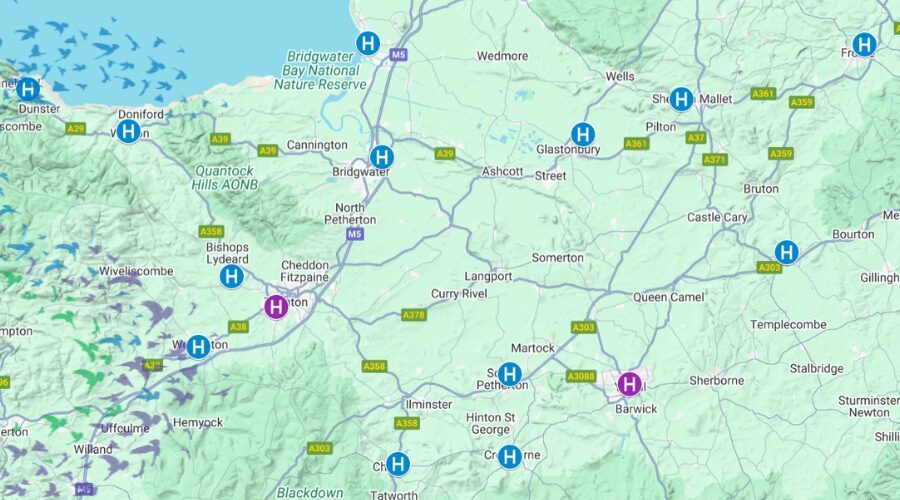
We are extremely fortunate to run 13 community hospitals in the heart of communities across Somerset. Our community hospitals are vital assets for the future delivery of healthcare services for local communities and we think there are exciting opportunities to make greater use of both Burnham-on-Sea War Memorial Hospital and Crewkerne Community Hospital with an expanded range of diagnostic services and treatments which could benefit many more local people.
We are running a test and learn in Frome, West Mendip and Bridgwater and are in the early stages of developing this second test and learn in Burnham-on-Sea and Crewkerne.
The outcomes from both test and learn processes and the public engagement led by NHS Somerset will help shape NHS Somerset’s new community services strategy which will enshrine the high-level principles of how the local NHS will deliver community services across Somerset.
How we have engagement with people in Somerset
We engaged with people in Somerset by:
- Reaching out to local people to understand how they access healthcare services in their local areas. The team has dropped into local venues and groups to hear from all voices, including those who are often less heard, about what’s working, what’s missing, and what would make the biggest difference to local people.
- Inviting people to fill in an online survey which focuses on their experiences and ideas for improving healthcare services in their area.
Early in 2026, the trust is establishing Neighbourhood Stakeholder Reference Groups in Burnham-on-Sea and Crewkerne and in the other areas where we are running a test and learn process, namely Frome, West Mendip and Bridgwater. These will be advisory groups that bring together a diverse range of voices to help shape community health and care services, ensuring decisions are informed by real experiences and local priorities.
What we heard
In September and October, we engaged with the public in Somerset, and in the Burnham-on-Sea and Crewkerne areas in particular, to understand how they use NHS services and the barriers to accessing services. We wanted to understand this, alongside a detailed review of the population health data and needs for those areas, and feedback from our hospital Leagues of Friends, colleagues and local councils.
Across Somerset we heard that:
- Most people access NHS services in their local areas but that it can be difficult to access the care you need locally.
- Some concerns about access to GP appointments and NHS dental care, and concerns about the closure or reduction of local services, leading to increased travel and stress.
- Many found online booking and telephone systems unhelpful and difficult to navigate.
- Transport to appointments, especially for those without cars, was a significant barrier. Public transport was often described as inadequate, expensive, or unavailable at needed times.
- Parking at health centres and hospitals was also a recurring issue.
We heard the same messages in Burnham-on-Sea and Crewkerne, alongside
- Very strong support and appreciation for Burnham-on-Sea War Memorial Hospital and Crewkerne Community Hospital.
- The majority of respondents said they faced challenges getting care locally
- Respondents reported having to travel significant distances (sometimes 20+ miles) for care, especially for dental, specialist, or urgent services and that lack of public transport and parking issues were barriers, particularly for those without cars or with mobility issues.
- They told us there was limited availability of certain services locally (e.g., mental health, physiotherapy, audiology, paediatrics, SEND support) and
- That it was difficult to book GP appointments and that waiting times were long.
In Burnham-on-Sea local people were also concerned about unscheduled closure of the Minor Injuries Unit at Burnham-on-Sea War Memorial Hospital.
People made suggestions for improvements. In Burnham-on-Sea and Crewkerne we heard requests for more NHS dentists, GPs and specialist clinics and outpatient appointments, a request to maintain and strengthen inpatient provision at the community hospitals, and more face-to-face appointments and continuity with the same GP.
In Burnham-on-Sea local people wanted reopened or extended hours at the Minor Injuries Unit and in Crewkerne local people asked for minor injuries and diagnostic services.
There is clear support for more services available locally but we also heard strong support for inpatient beds and concern about potential bed reductions at Burnham-on-Sea War Memorial Hospital and Crewkerne Community Hospital.
Needs of the communities in Burnham-on-Sea and Crewkerne
An analysis of the health of the population in the Burnham-on-Sea area shows:
- A rapidly ageing population, with 50% of the population aged over 65 by 2040
- A high proportion of the population with multiple long term conditions. In the Burnham-on-Sea area, several conditions ranking among the highest in England.
- High prevalence of cardiovascular and metabolic diseases such as coronary heart disease and stroke/transient ischemic attack (TIA), frailty-related conditions, respiratory disease and cancer prevalence.
- Overall, the prevalence profile confirms Burnham-on-Sea as a high-need coastal population with unusually strong clustering of cardio-metabolic, frailty, and chronic respiratory conditions. This reinforces sustained demand for frailty pathways, integrated long-term condition management, and rehabilitation capacity.
An analysis of the health of the population in the Crewkerne shows:
- An ageing population dominated by those aged 55 to 79 years old
- High prevalence of cardiovascular and metabolic conditions, obesity, non-diabetic hyperglycaemia, diabetes, and cancer prevalence.
Consistent prevalence of frailty-associated conditions in line with the area’s ageing demographic structure.