

Spotlight
Major upgrade for Musgrove Park Hospital’s nuclear medicine department
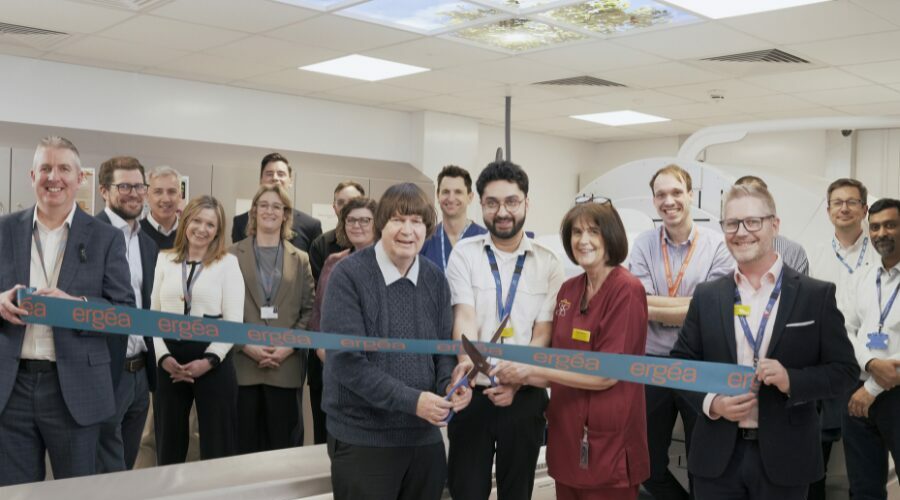
The nuclear medicine department at Musgrove Park Hospital officially reopened to patients on Thursday 26 February, following a major refurbishment and the installation of a state‑of‑the‑art SPECT‑CT camera.
Colleagues from the nuclear medicine team cut the ribbon to mark the occasion, celebrating how the hospital’s nuclear medicine team can scan patients with greater clarity and diagnostic detail than ever before.
The centrepiece of the redevelopment is the GE Discovery SPECT‑CT scanner, which brings together nuclear medicine SPECT (single‑photon emission computed tomography) imaging with diagnostic‑quality CT (computed tomography).
By combining these two technologies, detailed 3D images are produced that show both anatomical and functional activity within the body.
This advanced imaging is made possible by injecting a small amount of radioactive tracer that accumulates in specific tissues or organs. The resulting images help clinicians diagnose, monitor, and guide treatment for a wide range of conditions with far greater precision.
Suzie Mahon, our senior clinical technologist, says: “We are very pleased to be able to offer this level of nuclear medicine to our patients for the first time.
“Before the redevelopment, the future of nuclear medicine in Somerset was uncertain. The department’s ageing gamma camera – capable only of producing basic nuclear medicine images – was becoming increasingly unreliable, limiting the quality and consistency of the service.
“Faced with this challenge, several options were considered: replacing the outdated camera like‑for‑like, closing the department entirely, or investing in a modern SPECT‑CT system that would deliver high‑quality hybrid imaging and bring the service in line with the rest of the Southwest.
“Closing the department simply wasn’t a realistic option, as it would have meant patients under the care of Musgrove Park Hospital would have to travel to Bristol, Bath, Exeter, or Salisbury for nuclear medicine examinations.
“We serve a large geographical area, so upgrading to a SPECT‑CT system was essential to ensure patients could continue receiving the best possible care close to home, while also helping to reduce waiting lists by increasing local scanning capacity.”
“The benefits of the new system are already clear. For procedures such as parathyroid scans, performed prior to surgery, the enhanced imaging significantly improves localisation of the glands.
“CT is routinely incorporated into these examinations, and the fused anatomical and functional images allow clinicians to identify the precise area requiring removal.
“A greater accuracy in detection means less invasive surgery, shorter hospital stays, and faster recovery – a significant advancement for patient care.”
Jamal Master, a senior radiographer in the department, explains: “The introduction of this new SPECT/CT system means we can now offer far more advanced imaging than ever before.
“For example, we’re able to perform highly detailed orthopaedic bone scans to assess metalwork within the body and investigate more accurately why patients may be experiencing persistent pain.”
“Before this scanner was installed, patients often had to travel as far as Plymouth or Bristol for this level of diagnostic imaging. Having these services available locally means quicker access, less travel, and a much smoother experience for both patients and clinical teams.”
Mike Slade, our senior clinical technologist, describes how the new department has transformed the service.
“Although we remain a single‑camera department, we’re now able to offer a much broader range of scans,” he says.
“By redesigning the layout into clearly defined areas – including a dedicated injection room, laboratory, and patient waiting space – we’ve significantly improved patient flow and enhanced the overall experience for patients.”
Suzie concludes: “While we may not yet offer every possible nuclear medicine test, our aim is to continue expanding the service to include examinations such as DATscan, a specialist test used in the diagnosis of Parkinson’s disease as well as tumour imaging for neuroendocrine diseases.
“This investment not only futureproofs the service, but also supports efforts to reduce waiting lists across Somerset.
“We want to thank our colleagues at the Royal Devon University Hospitals NHS Foundation Trust for providing a nuclear medicine service for our clinically urgent patients while the department was closed. Several members of our team relocated to Exeter during this period, and their support was greatly appreciated by our regular Somerset patients.
“We would also like to thank our long term partners, Ergéa, for funding this project and for its continued support.”
Gavin Brooksbank, Head of Implementation at Ergéa UK, added: Our long-standing partnership with Somerset NHS Foundation Trust demonstrates the power of collaboration. We are proud to have contributed to the upgrade of the Nuclear Medicine department, creating a purpose-built facility that enhances patient care, streamlines services, and delivers lasting benefits to the wider community.”
Hear from Adrian - one of our patients - about how our nuclear medicine department has cared for him.