

Spotlight
Update on development of a test and learn process in Burnham-on-Sea
Listening to our communities
In 2025, we held a series of listening and engagement events across Somerset to understand people’s experiences of health services and what matters most to them.
People in the Burnham‑on‑Sea area told us there is strong support for keeping community hospital beds locally. Many said they often have to travel long distances to access some services and that this creates a barrier, especially for older people and those without transport. We also heard concerns about access to GP services, and mixed feedback about how reliable the Minor Injuries Unit feels.
Alongside this, we reviewed the health needs of the local population. Burnham‑on‑Sea has an older population and higher levels of long‑term health conditions than many other parts of England. The population is ageing quickly and is expected to include around 50% of residents aged over 65 by 2040. Many people live with more than one long‑term condition, and there are high levels of heart and circulatory disease, frailty, respiratory illness and cancer.
This means there will continue to be strong demand for services that support people living with frailty, help manage long‑term conditions in a joined‑up way, and provide good access to rehabilitation.
Test and Learn
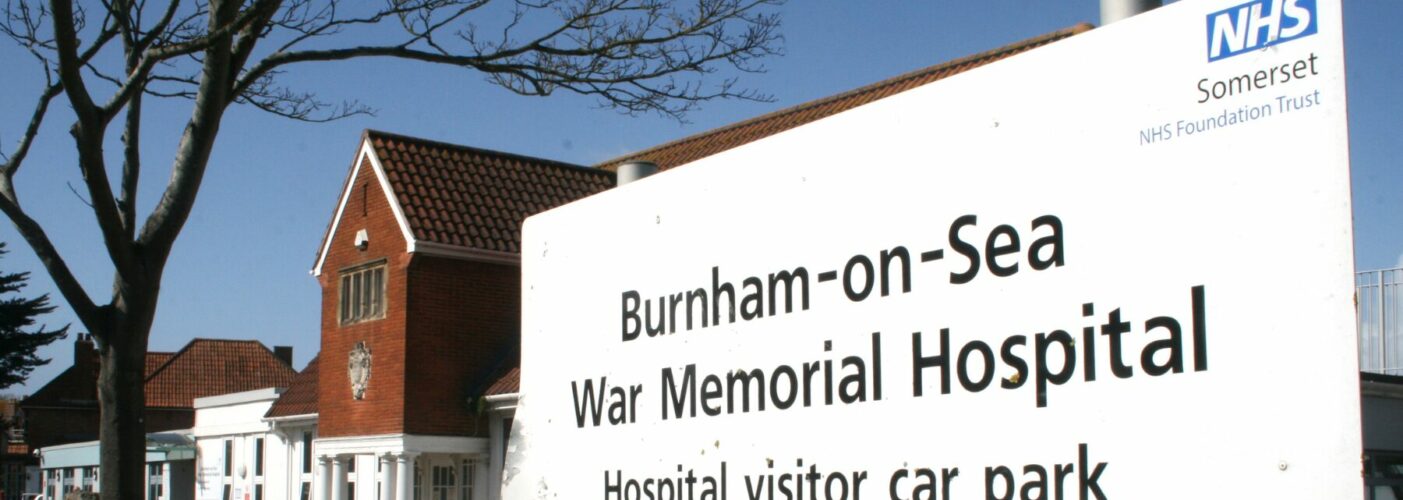
Based on the outcome of the engagement and a good understanding of the population health and needs of the local population, we had made a decision to develop a test and learn process that retains beds in Burnham-on-Sea War Memorial Hospital but temporarily reduces them from 16 to 8 and provides additional services such as chemotherapy, specialist outpatient clinics, weekly maternity services, and support for frailty. This retains beds in the community hospital and provides additional services. Any changes will be temporary, and no decisions have been made to permanently close community hospital beds.
Colleagues have spent the last few months planning how to provide additional services from Burnham-on-Sea War Memorial Hospital, using space freed up by the reduction in the number of beds. Some new services are confirmed to begin at the hospital from May, and others are being planned but not yet confirmed.
From 1 April, we will close 8 beds as patients are discharged from those beds. Colleagues will undergo specialist training to support new services that will be introduced from May. We are also recruiting to support the new services.
The new services that we are introducing in May are:
NEW - Ambulatory care
From Monday 4 May, a new specialist care service, known as ambulatory care, will run at Burnham‑on‑Sea War Memorial Hospital. Clinics will operate Monday to Friday, 8am to 6pm.
This means local people will no longer need to travel to Bridgwater for ambulatory care.
Bridgwater Hospital will continue to run its clinics on Mondays, Wednesdays and Fridays, 9am to 5pm.
What is ambulatory care? Ambulatory care covers a wide range of routine and advanced procedures delivered in the community. This includes catheter fitting and removal, complex wound and leg ulcer care, chemotherapy support such as pump removal and PICC line management. These treatments are provided in clinics, so patients do not need to attend an acute hospital or stay overnight.
Where will the service be delivered? Patients will receive booked appointments for their care. Appointment times will vary depending on the procedure required and patients will usually sit in a chair or on a couch during treatment rather than lying in a bed. Work is currently underway to convert two unused rooms into clinic spaces with specialist ambulatory chairs.
Who provides the care? Highly trained nurses will run the service and are skilled in assessing, treating and carrying out a wide range of procedures.
How do patients access it? The service supports people already receiving specialist treatment for ongoing health conditions. Referrals will be made by GPs, practice nurses and hospital teams such as cancer services.
NEW - Community paediatric service pilot
From 23 May 2026 we are beginning a pilot called the Paediatric Interface Pilot led by Dr David Capehorn, a GP from Symphony with an extended role in paediatrics for an initial period of six months.
The aim is to improve access to paediatric expertise closer to home through clinics held once a fortnight on a Saturday.
This will give families quicker reassurance and support, help GPs make well‑informed decisions, and reduce unnecessary hospital referrals and visits. The pilot will also help identify learning that could support the development of a future integrated paediatric care model for Somerset.
Services under development
- Discussions are underway to launch a new chemotherapy service at the hospital as part of expanding cancer care in the community. More information will be shared soon.
- We are also working with health and care partners to explore offering additional specialist clinics and general health and wellbeing services at the hospital.
Strengthening the Minor Injuries Unit
We are also working with Symphony to improve the resilience of the Minor Injuries Unit that is run from the hospital site and Symphony is in the process of recruiting to enable this. During our engagement we heard that local people were concerned about the unscheduled closures and the unpredictable opening hours of the Minor Injuries Unit and we will share further updates as we make progress.
Your views are important
Earlier this year, we set up Neighbourhood Stakeholder Reference Groups in each of the areas where we are running a test and learn process. They are advisory groups that bring together a diverse range of voices to help shape community health and care services, ensuring decisions are informed by real experiences and local priorities.
For more information on the Neighbourhood Stakeholder Reference Group in Burnham-on-Sea, please contact Norma Coombes, senior matron on: norma.coombes@somersetFT.nhs.uk.