

Spotlight
Laura Ball is the first allied health professional in Somerset to take up a doctoral research role
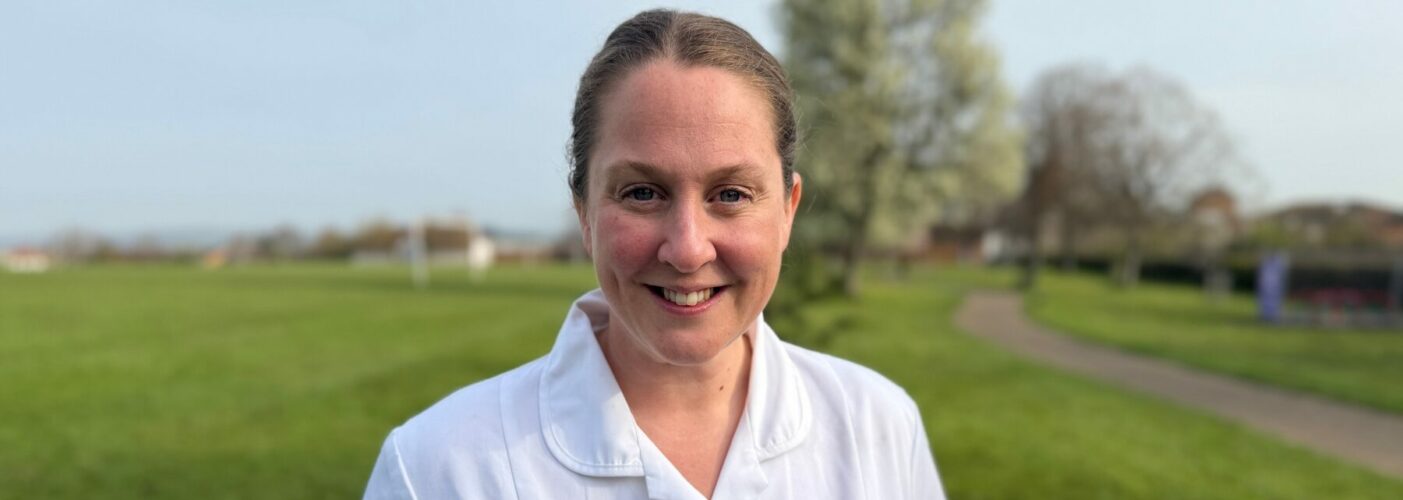
We often hear about the successes of our many clinical research nurses across the trust, but now Laura Ball has become the first allied health professional (AHP) to take on a doctoral research role.
Laura, who’s a speech and language therapist working across Musgrove Park and Yeovil hospitals, is the instrumental lead, which means she leads the x-ray (videofluoroscopy) and flexible endoscopic evaluation of swallowing (FEES) assessments for our speech and language therapy team.
Laura has been in her speech and language therapy post for over two years, and says the opportunity to get involved in research swayed her decision to join the trust.
She says: “I was excited to move to Somerset FT to work in the new role as pathway lead for instrumental assessments, and to work day-to-day on critical care, while also seizing the opportunity to apply for the National Institute for Health Research (NIHR) Doctoral Fellowship also.
“I have now become a successful awardee of the Doctoral Fellowship – and I started the role on 1 January 2026.
“Before I joined our trust, I worked at Exeter for 10 years where I published a paper on some clinical data that I had gathered.
“The paper was on the predictors of somebody developing pneumonia on a speech and language therapy caseload if food or drink went down their windpipe the wrong way.
“We needed to work out which patients can manage this happening, as well as those who run into difficulty, and subsequently get pneumonia.
“Following the paper publication, I applied for the National Institute for Health and Care Research (NIHR) doctoral fellowship to extend my work.”
Now Laura is celebrating after her hard work paid off as the NIHR awarded her funding for a doctorate fellowship.
“I’m thrilled to have been awarded funding, especially as it’s the first time that we’ve ever had an allied health professional at our trust go through this kind of research process,” she adds.
“It’s a long process and it took about a year to develop my initial application in my own time, but it was worth it.
“Once the application went in, I did a lot of preparation, including having four mock interviews with research providers across the UK, before going for the NIHR interview. To my delight, I found out I was successful.
“It’s a full-time award, where I work five days a week, employed by our trust to continue some of my clinical role, while I’m also now affiliated to the University of Bristol, which has given me useful connections within the speech and language therapy research unit based at Southmead Hospital.
“It’s going really well so far. I’m still new to it and there’s lots to learn, but I like that I can maintain my clinical work as a speech and language therapist, while also beginning my clinical academic career, and I’m enjoying the balance between the two things.”
Laura’s project will use data from multiple UK NHS trusts, so it will have the feel and profile of a national-scale project.
“I’m still going through the first stage ethical and protocol approvals, but I’ve already had significant registered interest from my 2023 paper, where lots of NHS trusts want to be involved,” she continues.
“My fellowship is three years in total, where I have to achieve certain outcomes every year. Over the three years I will review the literature, work with patients and professionals who are experts in the area, engage other NHS trusts, collect data, and write papers about the research.
Asked whether she had any advice for others thinking of applying for a research post, Laura adds: “The NIHR is just one of many potential providers of funding for research studies, so my advice is don’t assume you have to jump fully into academic research, as there are so many opportunities available now that didn’t exist historically, making it much easier to balance your clinical and research careers.”