


Spotlight
New sensory machine for paediatric cardiology at Musgrove Park Hospital
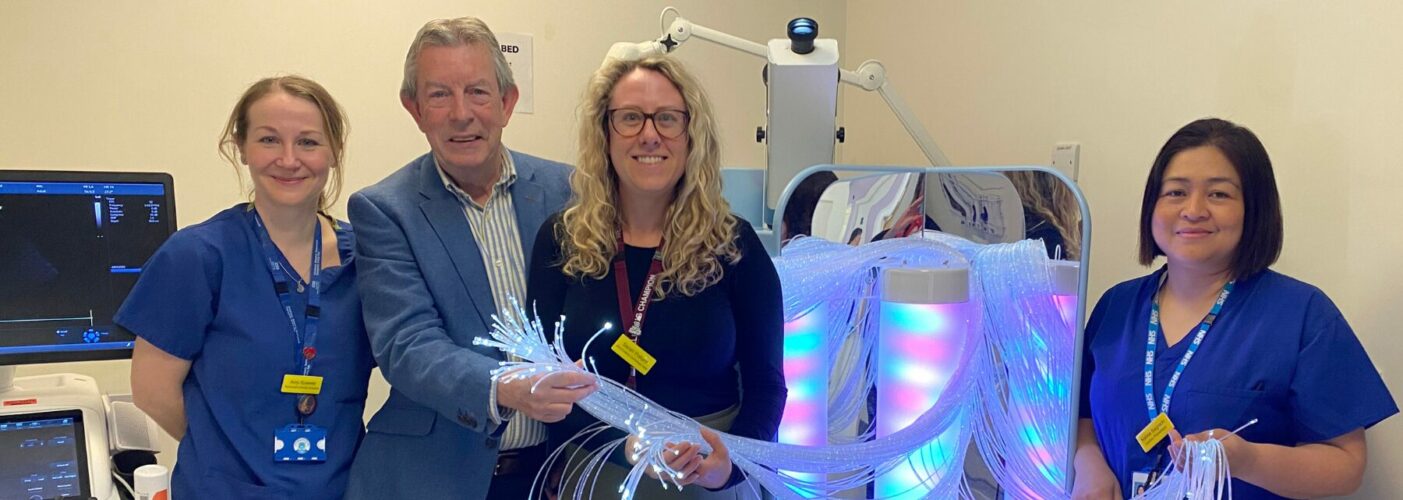
The cardiology team at Musgrove Park Hospital is now using a brand new sensory machine to help distract and comfort younger patients, and those with additional needs, during their heart scans, thanks to a generous donation from the League of Friends.
The new unit – costing around £3,000 – was fully funded by the League of Friends. It brings colourful LED lights, fibreoptic strands and gentle ceiling projections into the hospital’s echocardiogram rooms, making what can often be an anxious experience feel calmer, more engaging, and much more child‑friendly.
Amy Szewiel, our advanced clinical scientist in echocardiography, says the difference it makes is already clear.
“A lot of our patients, especially children and people with learning disabilities or sensory needs, find it hard to lie still on their back while we carry out an echocardiogram,” she says.
“It’s a very important scan that lets us look closely at how the heart is working, but it can be daunting if you’re young or easily overwhelmed.
“We can’t thank the League of Friends and their supporters enough, as although this equipment might seem simple, the impact on our patients is huge. It brings comfort at a time when they really need it, and it means a lot to us to be able to offer that.”
League of Friends President Clinton Rogers says the committee had unanimously supported the bid from the hospital’s cardiology department.
“Anything that can improve the patient experience, especially for young people, is what the League is all about,” he says. “We were delighted to support the bid.”
Amy works closely with her colleague Nelisa Sagrado, one of our cardiac physiologists, to scan patients with congenital heart disease. Amy adds that the new sensory equipment is helping to transform that experience.
“The unit has beautiful LED tubing and fibreoptic strands that light up when you touch them, and the projector casts calming images and colours onto the ceiling,” she says.
“It means patients have something soothing to focus on while we’re doing the scan. Instead of staring at a blank ceiling, they can look at soft, shifting lights that help them relax.”
Amy says the team had been looking for ways to better support paediatric patients and having something like this makes a huge difference.
“You can really see the difference in the patient the moment the room lights up, as they become more curious, more comfortable, and much less anxious about what’s happening," she says.
She adds that the sensory elements also give patients a sense of choice and control during the procedure.
“For some children, holding the fibreoptic strands or watching the images on the ceiling is enough to keep them engaged for the full scan,” she says.
“Anything that helps them stay still and calm ultimately makes their experience better and helps us capture the images we need to complete the scan.”
Amy says the team is excited to continue using the sensory unit and is already seeing how it helps build trust and reassurance in children who may need future appointments.
“It’s lovely when a child comes back for another scan and remembers the lights or the projector from last time,” she adds.
“It gives them something positive to associate with being here, and that can make all the difference.”