


Spotlight
Mental health and dementia research goes from strength-to-strength in Somerset
It was two years ago we reported that the trust had been awarded funding from the National Institute for Health and Care Research’s peninsula regional research delivery network for a research associate role in mental health.
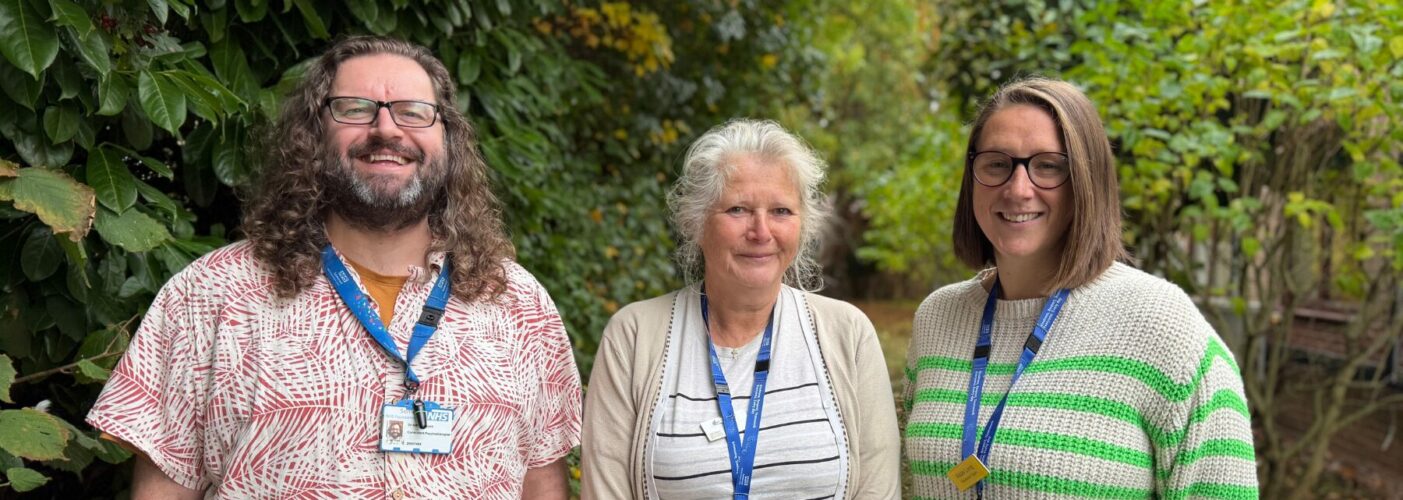
Showing a huge passion for research, our consultant psychotherapist, Dr Adrian Hayes, was appointed into this role, and he reflects on the incredible progress made in mental health and dementia research across the county during this time.
“When I first stepped into the research associate role my main aim was simple in that I wanted to increase the amount of mental health and dementia research we are doing in Somerset,” Adrian says.
“At that time, it’s fair to say that we weren’t doing much of our own research, as we had just six colleagues named as principal investigator of studies, and we were only involved in nine projects in total.
“Fast forward two years and we’re now involved in 25 projects, and each year we’ve been able to double the number of participants recruited to research projects in Somerset, from 57 to 232.
“We now have over 100 clinicians involved in research activity in mental health and dementia – a huge increase and a great result for the investment in my research associate role.”
Adrian explains how the lengthy processes and paperwork used to be a barrier for colleagues in getting involved in mental health and dementia research.
He adds: “We found out that many colleagues had been turned off by what they saw as red tape, thinking research was boring, and lots of people had bad experiences of dry research training, so we wanted to get them involved with immersive practical and patient-facing studies straightaway, to capture and sustain their interest.
“I teamed up with a couple of colleagues in our research department – Alicia Long, a clinical trials officer, and Carinna Vickers, a research nurse. Together we formed a really good team, and it allowed more access to additional teams and processes.
“We started off by setting up a monthly meeting where we talked about existing research in the trust, and we found that 165 colleagues signed up to be on the mailing list for that meeting – a great start that showed a really big appetite for all things research!
“We engaged them a bit more in thinking about what sort of projects they might want to get involved in, and whether it would be something that could benefit our trust and patient care.
“This approach meant they felt invested, so we were able to ask who’d like to work on it and potentially become the principal investigator, and so on.
“We started to look after the colleague groups who need to do research as part of their role or studies, such as our trainee psychiatrists who must do research as part of their portfolio, and our assistant psychologists, clinical associate psychologists, and advanced clinical practitioners.
“To make this happen, we tried to match colleagues up to work on projects where they could get the experience they needed, starting them off on something easy like doing a questionnaire study, and then working up the more complicated things, and then taking on a formal role, such as becoming an associate principal investigator.”
The complexity and profile of studies has increased over the two years of Adrian’s research associate tenure, with more intervention-based studies, and even a drug trial that looks at two different medications for people who have problems with hypersalivation (drooling).
Adrian adds: “We have such a wide range of studies running now, including one specifically for people with Alzheimer’s and another for mild cognitive impairment – which you can read about elsewhere on our website.
“I took a particular interest in this commercially funded trial about non-dementia memory problems. This was where a team of researchers from Oxford created an app called Five Lives Med to determine whether it could help slow down the progression of memory issues and dementia, and we’ve been using it in a randomised trial.
“Another study looked at how hearing impairment relates to dementia, where we’re validating a new screening questionnaire for memory and social functioning.
“We also have an ongoing study on sexual health intervention for people with severe mental illness, called More Respect, which involves three sessions of safe sex and STD education, as well as the boundaries of consent and healthy relationships.
“For that one, we trained a number of clinicians to run the intervention, and other colleagues to measure the impact it made.
“Over the two years we’ve done a study on paranoia, and another about people presenting to an emergency department following self harm. Another interesting study is how we’re looking at people’s visual appearance in hallucinations in psychosis, which is a questionnaire study – called Vision Quest.
“We’ve had quite varied types of projects, both medical and psychological, with different patient and colleague groups.”
Adrian says he’s proud of the leaps and bounds that colleagues have made over the last couple of years. “I hadn’t realised how well we’d done until I started getting feedback,” he continues.
“I knew that colleagues would be interested in mental health and dementia research, and this role gave me the opportunity to meet different colleagues and teams interested in research, and I found that they were genuinely pleased to see me, and were keen to listen to the guidance and support I was able to offer.”
One of our clinical psychologists, Dr Row Pagdin, says: “My involvement in research has been a tonic and like an intellectual holiday, an absorbing project to engage with, linked to and also outside of the constant pressure of NHS working.
“It has reignited my curiosity and passion for mental health, and has reminded me why I chose my profession, as I’ve been able to dust off old skills and learn some new ones and engage with like-minded colleagues.”
Adrian concludes: “I want to thank everyone who’s been involved and shown so much enthusiasm, especially our research department for being so open to the hard work I’ve given them!”
For more information about research at the trust, head to the research pages elsewhere on the website.