


Spotlight
Speech and language therapy lead champions culture of research
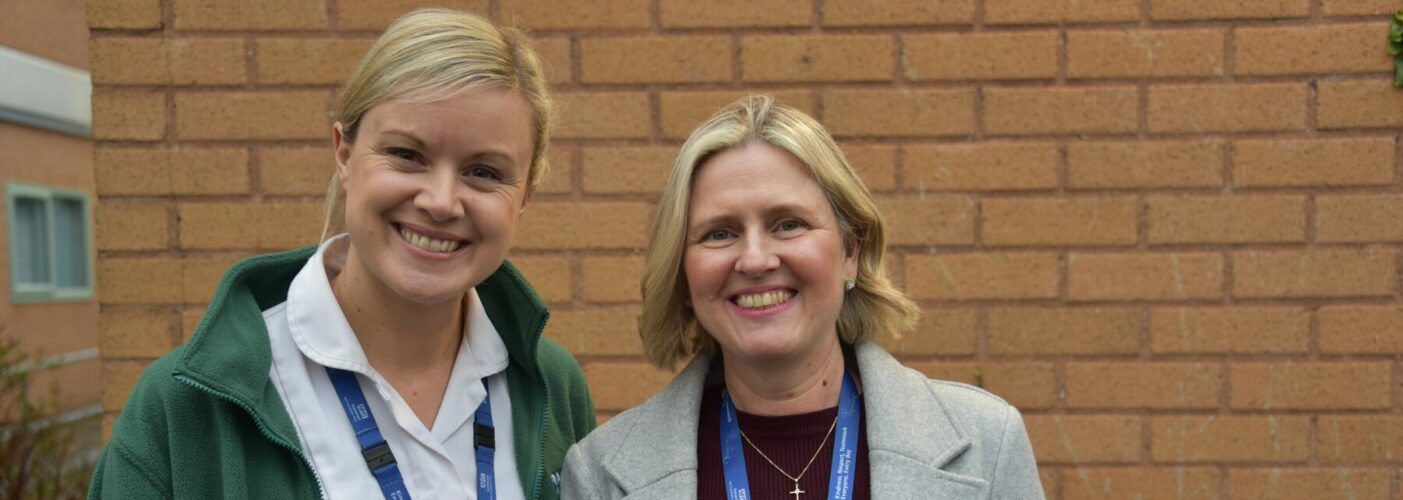
Our head of speech and language therapy is encouraging a growing research culture within the service, by enabling three colleagues in the team to pursue research opportunities alongside their clinical work.
Karen Dockings believes research is essential to the long‑term future of the NHS, saying it’s not just an optional extra, but fundamental to improving patient care.
“I think research is absolutely vital for the future of the NHS, as without it we don’t progress or develop,” she says.
“Research encourages innovation and supports evidence-based quality care. It is very much the way forward, a vital part of our clinical activity, with clinicians of all bandings able to get involved.
“I think it’s fair to say that our service has always taken an active approach to evidence‑based practice, regularly undertaking small‑scale improvement projects and keeping up to date with the latest literature.”
But things stepped up significantly when Janine Andrews, a speech and language therapist in the team, approached Karen with an idea she wanted to explore further.
“Janine came to me a couple of years ago with some really thoughtful research ideas, and wanted to know how she could progress them within her role,” says Karen. “That was really the beginning of formal research posts within our service.”
Karen put Janine in touch with Ralph Hammond, clinical fellow at the Somerset Clinical School, and she went on to secure a place on the Chief Nurse Research Fellowship programme, gaining funded time for research one day a fortnight.
She adds: “It is tricky as a manager to release clinical time for research, as staffing is so tight, and you’re constantly working out how you can accommodate that time so people can flourish, without pulling them back into clinical work.
“But we managed it, we had some investment in staffing, and we found a way to support Janine’s post.”
Janine’s study focused on how patients with aphasia receive information about their medications following stroke.
“When I heard Janine present her work, it reinforced how important research is,” Karen continues. “Janine’s work didn’t just benefit stroke patients with aphasia, but was applicable to so many other groups.
“It made me think about people with dementia or those with communication difficulties, and whether they are getting their discharge from hospital information in a way they can understand.
“Our trust has really taken Janine’s project on board, and we want to expand that thinking into the discharge process for all patients.”
Our speech and language therapy service is now supporting two further colleagues in their research. Sarah Fletcher is undertaking a one‑day‑a‑week funded post, which Karen says was easier to accommodate because she works part‑time.
“Sarah’s extra day didn’t impact her clinical work, so we didn’t need to release her,” Karen adds. “It was simply paid as an overtime day, and it’s been wonderful to see her developing her research interests.”
Meanwhile, Laura Ball has taken up a National Institute for Health and Care Research (NIHR) doctoral fellowship — a highly prestigious position that Karen supported from the moment Laura joined the trust.
“Laura’s post was very competitive,” Karen explains. “She did a huge amount of preparation in her own time, because the application alone takes around a year and requires a published paper.
“She had already published a paper from her time in Exeter, and I knew when we employed her that she wanted to pursue that route.”
Operational pressures initially made supporting Laura’s fellowship challenging, but Karen worked with her to find a practical solution.
She adds: “We did need to negotiate a little, and I wasn’t able to agree the start date she wanted at short notice because of significant pressures we were facing, but we agreed that she would defer her start by a few months, and that worked for everyone.”
Karen says the work Laura is going to do will bring real benefits for both the profession and for patients.
Across the wider department, Karen is committed to keeping research opportunities high‑profile. She regularly shares fellowships, development programmes and team presentations to motivate colleagues.
“Every time I hear about a fellowship or a funded opportunity, I share it with the team,” she says. “Seeing colleagues like Janine present their work really energises people, and really shows them what’s possible.”