


Spotlight
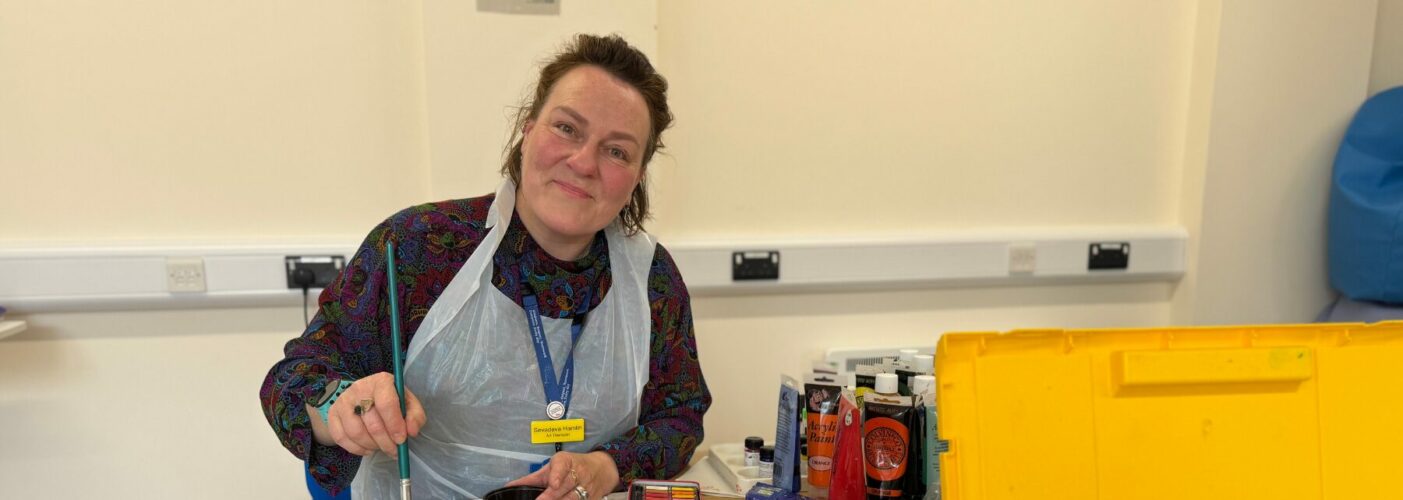
Introducing Sevadeva Hamlin – our children and young people’s art psychotherapist
Sevadeva Hamlin joined our paediatric psychological therapies service in 2024 to develop a dedicated art psychotherapy offer for children and young people – a role that has since become a permanent part of the service.
She was initially brought in on a fixed‑term contract to establish art psychotherapy within the psychology team, supporting children and families referred through our children and young person’s community palliative care team (CYPCPCT) referral pathway.
The service was quickly shown to meet an important need, particularly for young people and family members who struggle in a purely talking/verbal therapy setting.
Sevadeva's work involves sessions with children and young patients, their parents or caregivers and their siblings, whose lives are affected by the diagnosis and treatment of living with a life‑limiting illness or cancer.
Art psychotherapy offers client-centred, creative, therapeutic support to enable individuals to explore, express and process emotions, thoughts and feelings, in a safe and supportive space.
“People are often curious about art psychotherapy and are understandably a little unsure at first,” Sevadeva explains.
“What tends to reassure them is knowing there’s no right or wrong way to do this, as it’s not an art lesson, but more about having the space to express themselves and be understood without judgement or expectation upon them.”
Referrals for art psychotherapy come through to our paediatric psychological therapies team, with colleagues working and liaising together at triage to ensure young people and families are matched with the most appropriate support, as each clinician within the team each has their own specialist areas of clinical work.
“Art therapy sessions are flexible and tailored to the individual with their needs and intentions for therapy in mind,” Sevadeva continues.
“This may involve directive or free association drawing, painting, working with clay, pastels, collage – whatever the person is drawn to that day.
“Sessions with younger children may begin with game playing or gentle physical activity to help them adjust before focusing in on creative work, whilst older clients can find it easier to relax and engage when their focus is on the creative process, besides talking.
“Some feelings or emotions can be challenging to articulate and image making, and play gives us an effective way to communicate what’s going on within us, without needing to find the words or limit us to a specific language. Sometimes we share the space in silence, we talk, we play – all of this is growthful and meaningful.”
Using creative outlets can help with the release of tension, help regulate breathing and soothe a heightened nervous system or agitated mind.
It can contribute to greater body and self-awareness, through which, we can work together in our sessions on developing coping strategies and resources to support resilience.
Having the space to sit, or discuss our fears for the future or challenging scenarios, can help us explore and develop our thinking or feelings around them, so they hold less power and this process may soften or minimise their impact upon us as we face them, thereon.
“The more people understand themselves, including their strengths and how they cope under stress/distress, the better equipped we are to manage future challenges,” she adds.
“Although art therapy can be adapted to any setting, the opportunity to have a wide range of different art materials available to choose from, in a welcoming, calm and less clinical space, enables people to feel more relaxed and comfortable.”
Since joining the team, Sevadeva has supported a trainee art therapist placement and provides art therapy in schools, at homes and community clinics.
The permanent establishment of Sevadeva’s role in paediatrics reflects a growing recognition of the value and integration of art psychotherapy within the different services across our trust.
“There is no single approach that works for everyone,” Sevadeva says. “Having a broad range of psychology/therapeutic frameworks and offerings means the service can more inclusive and meet people where they are.
“I’m grateful that art psychotherapy and creative therapies are becoming increasingly recognised and implemented to support children, young people and families across Somerset.”
Art psychotherapy is a protected title, and therapists undertake a three year Masters degree, after which they are HCPC registered AHPs. In total we currently have 11 art psychotherapists employed across our trust.
Here's a short video where you can hear more from Sevadeva: