
Spotlight
Spotlight on our bereavement and mortuary services
Every year, thousands of families across Somerset experience the death of a loved one.
At what can be one of the most difficult moments in anyone’s life, colleagues in our bereavement and mortuary team work quietly, sensitively, and professionally behind the scenes to provide reassurance, clarity and compassionate care.
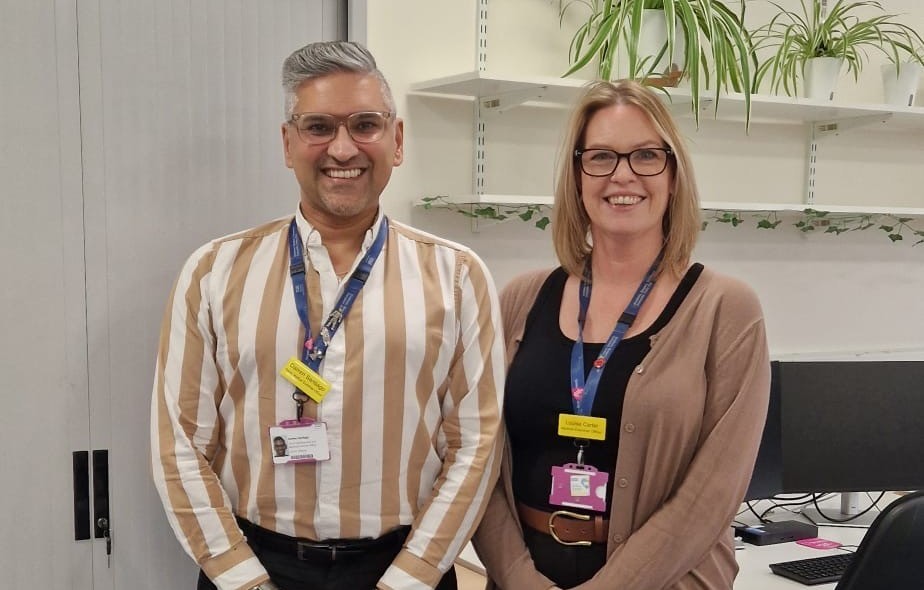
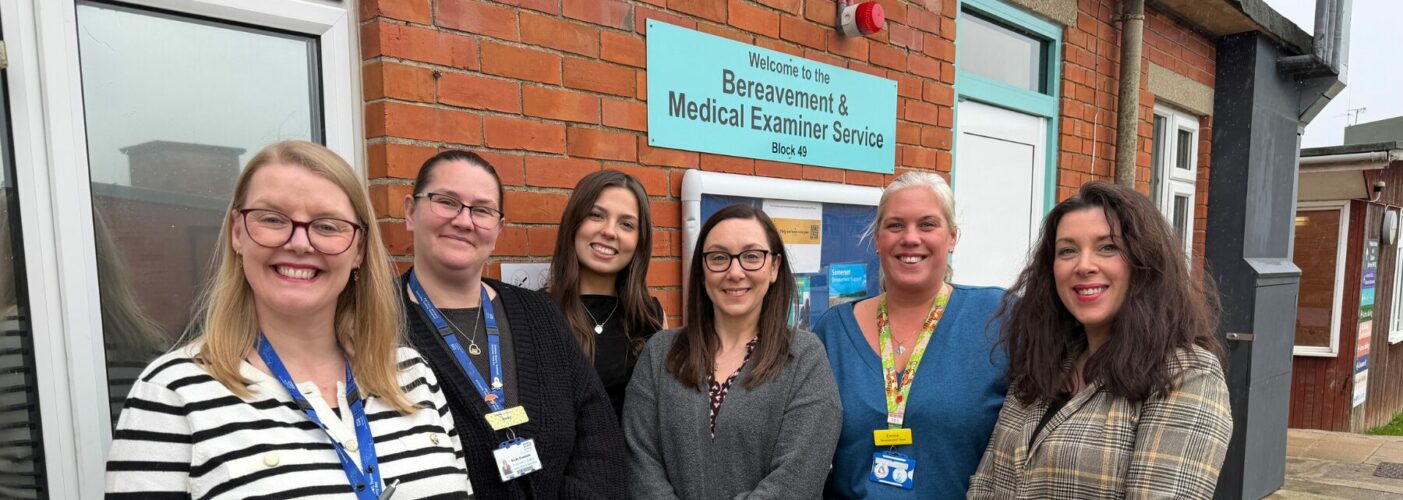
Though their roles are often unseen, their impact is felt deeply, and, as our head of bereavement and medical examiner service, Helen Waldon, puts it: “We only have one chance to get it right.”
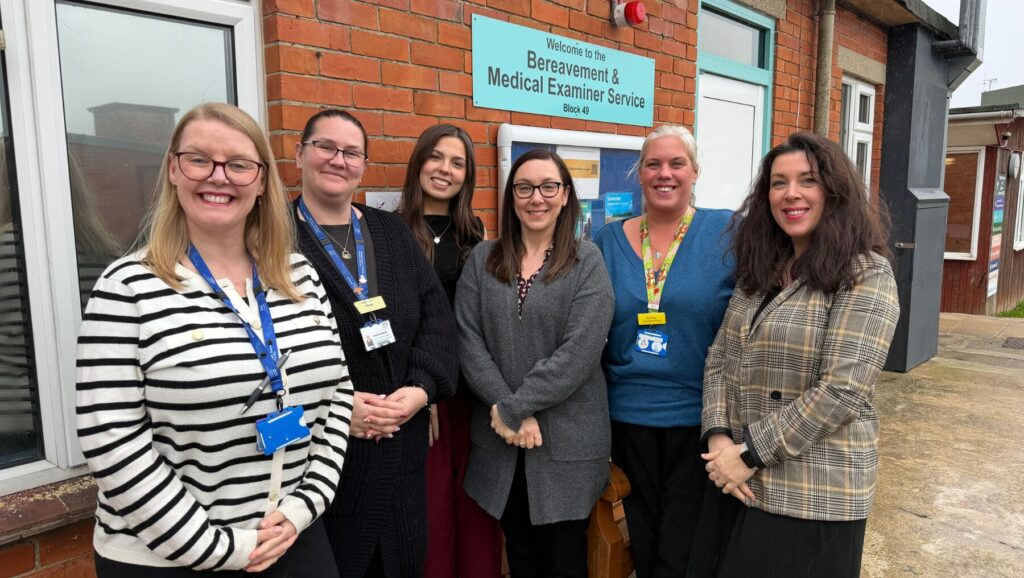
Our bereavement and medical examiner service supports the families of patients who die in any area of our trust, as well as those in the community whose deaths are not under the coroner’s jurisdiction.
“The service is very much a hybrid model that helps families understand the practicalities and legalities of what happens after someone dies,” adds Helen.
“We’re not counsellors, but we do offer emotional support, and we guide them through the paperwork, the terminology and what they need to do next.”
Since the introduction of the statutory medical examiner system in September 2024, every non‑coronial death is independently reviewed by a medical examiner who was not involved in the patient’s care.
“This helps ensure that the cause of death is accurate,” Helen explains. “It also gives families an opportunity to raise concerns or share positive feedback about the care their loved one received.
“We always put a strong emphasis on explaining complex information in a way families can understand, as clinical wording can be difficult at such an emotional time. We always try to use public‑friendly language.”
The remit of our bereavement service has grown considerably over the years. Alongside supporting inpatient areas across the trust, the team now reviews deaths referred from GP practices and hospices – around 6,000 deaths each year, significantly more than ever before.
“We’re supporting inpatient areas, community hospitals, psychiatric wards, GP practices and the hospice,” Helen continues. “It’s a huge responsibility, but our priority is always the patient and their family.
“Supporting clinicians is also a key part of our role, especially as many doctors have never completed death certification before.
“It’s a heavy, sensitive subject, and some wards see more deaths than others. We want our office to feel welcoming and supportive, because that ultimately helps families.
“We also provide ‘care after death’ training for colleagues across the trust. Whatever happens in that moment stays with the family for the rest of their lives, so it’s very important we get it right.
“Our bereavement services and the mortuary team work closely together to ensure a seamless, respectful process from the moment a patient dies until they are transferred to their chosen funeral director.
“Once the medical certificate is complete and families confirm the funeral director, we issue the release paperwork. Until then, their loved one remains in the care of our mortuary team.
“On rare occasions where family members have died together, our mortuary team will place them next to each other. Being able to tell families that is incredibly reassuring.”
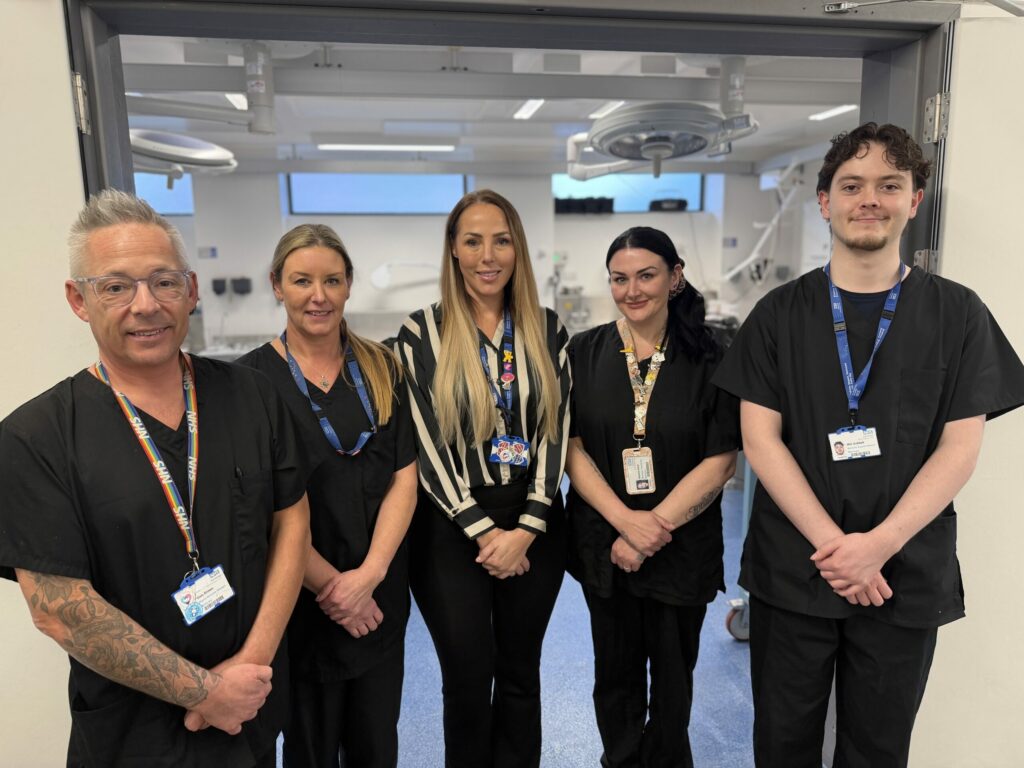
Our mortuary manager, Kelly Follett, describes her team’s role with deep humility. “We’re responsible for the care of people after they’ve died, before they go to the funeral director,” she says.
“It’s the last bit of care we can give someone – and in a way, it’s the most important bit, because they don’t have a voice anymore.”
The mortuary at Musgrove Park Hospital holds 58 patients, with capacity for 12 more in a temporary unit, and supports both trust deaths and those in the community under the coroner. The Yeovil Hospital mortuary holds 44 patients, with capacity for 12 additional spaces.
The team includes anatomical pathology technologists (APTs), mortuary support workers and pathologists across both Musgrove and Yeovil.
“We feel privileged to do what we do,” Kelly says. “We support families, as well as clinical colleagues – especially during very emotional situations like paediatric deaths.
“We encourage colleagues on our hospital wards to reach out whenever they need to. If someone isn’t sure how to wrap a patient correctly, we want them to call us, as we’re here to support everyone.
Our mortuary team also goes above and beyond to honour personal, cultural or faith needs. “If a patient didn’t want to come to the mortuary, or if a family has a particular requirement, we’ll do everything we can to make it happen,” Kelly says. “It takes teamwork, but it’s so important.”
Given the emotional weight of the work, both teams are mindful of their own wellbeing. “We deal with such a heavy subject,” Kelly reflects. “We need to look after ourselves so we can be there for families.”
Helen agrees: “We’re passionate about patient care and doing what’s right for each family. That dedication is what makes our teams so special.”
Both services also support organ donation pathways, including eye donation, which is facilitated in the mortuary.
Across both teams, there is a shared sense of purpose: to provide clarity, dignity and reassurance at a time when families need it most.
“We’re lucky to be able to give this final bit of care, Kelly says.” And, as Helen reminds us: “families carry these memories with them forever. We only have one chance to get it right.”
Their work may be quiet and often unseen, but for the families they support, it means everything.