

Spotlight
Orthotics team in Somerset cuts waiting times and improves care
Many people may not know what orthotics is, but for hundreds of Somerset patients every month, the service makes a life changing difference.
The orthotics service at our trust provides external supports for the body, ranging from spinal braces and collars to knee braces, specialist footwear and insoles. These interventions help people stay mobile, maintain independence and participate fully in everyday life.
"A lot of our patients are complex and have lifelong conditions,” says Nina Darke, our head of orthotics. “We can support some people from childhood for the rest of their lives, which makes our service quite unique."
From children with complex needs through to older adults and people living with lifelong conditions, the service works closely with a wide range of specialist teams across Somerset, including diabetic foot services, paediatric neuromuscular services and adult neurological pathways.
Colleagues in the team are receiving national recognition after significantly reducing the time patients are waiting for appointments. A waiting list that previously stood at around 700 patients across Somerset has now fallen to fewer than 100 on each site, with waiting numbers in Yeovil reduced to below 50, a huge improvement.
They have been shortlisted for Team of the Year at this year's British Association of Prosthetists and Orthotists (BAPO) awards, something Nina describes as “a real honour” and “a wonderful recognition of the care, commitment and compassion that the team shows every day.”
She continues: “For us, this nomination reflects the hard work that happens quietly in the background across our whole team: how we listen to patients, support each other, and do our very best to make a real difference to people’s lives.”
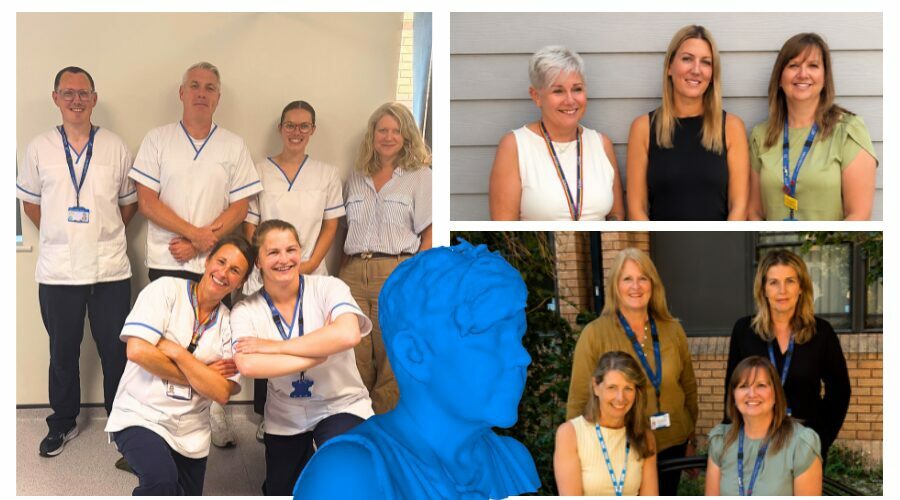
Despite covering the whole county, the service is a relatively small team of 12 colleagues, including five orthotists, administrative colleagues and management colleagues.
With bases at Musgrove Park and Yeovil hospitals, the team also runs clinics in community settings, including South Petherton Community Hospital and Fiveways School, a specialist school for children aged 4 to 19 with profound and multiple learning disabilities, severe learning disabilities and other complex needs bringing early help and support.
The team sees around 600 patients a month through outpatient clinics, alongside supporting inpatients across both Musgrove Park and Yeovil hospitals.
For many patients, orthotic support plays a key role in rehabilitation, as following a stroke, for example, orthotists can provide lower limb splints that help people regain mobility, maintain range of movement and prevent complications while they recover. Some patients need support for a short time, while others are supported by the service throughout their lives.
Over the past few years, the team has focused on transforming the way the service works. New technology has been introduced, including 3D scanning, which allows orthotists to create digital models instead of relying solely on traditional casting methods.
The team also uses 3D printing technology to develop bespoke supports and insoles tailored to individual patients.
The team has integrated with the NHS App, using Patient Hub to communicate with patients and share educational resources and self-care guidance, improving contact and helping reduce the amount of patients who do not attend their appointments.
The team has carried out projects to make patient care safer, more personalised, and better supported after leaving hospital, as well as making sure every clinic runs efficiently and fully utilised. The team's administrative colleagues have also played an important role, adapting to new processes and supporting major changes across the service.
The service places patients at the centre and works closely with colleagues including diabetes, paediatrics, neuro, spasticity and MND, so orthotic intervention is best timed and aligned with wider pathways such as surgery, injections and serial casting, particularly for complex cases.
Good orthotics can prevent amputations, hospital admissions and long-term disability, and integration with other services is key.
In a single spasticity clinic visit, an integrated plan is agreed that can include orthotics, medication review, ultrasound-guided botulinum toxin, and physiotherapy advice, reducing multiple appointments and ensuring orthotic provision is optimally timed for best outcomes.
Doctors, physiotherapists and orthotists benefit from less paperwork and can work together more easily, sharing their skills and knowledge to provide better care for patients.
Patients consistently provide positive feedback, including specific comments that orthotist input in spasticity clinics improves their experience:
“The orthotic practitioner was absolutely brilliant, sympathetic, capable, well trained, and generally lovely,” says one patient.
“Having a facility for orthotics in spasticity clinics is magic and has avoided unsuitable treatment, it is marvellous,” said another patient. “We have to travel a distance and saving repeat trips is unbelievable.”
Much of the team's work supports the NHS ambition to focus more on prevention and helping people stay well for longer.
Nina explains: "If we're keeping people mobile, keeping people in work and able to participate socially, there are benefits for mental health, the economy and wellbeing. It's about the holistic benefit to the person, rather than just concentrating on a physical gain."