

Spotlight
Acute medicine at Musgrove Park Hospital rated top in the country for doctor training
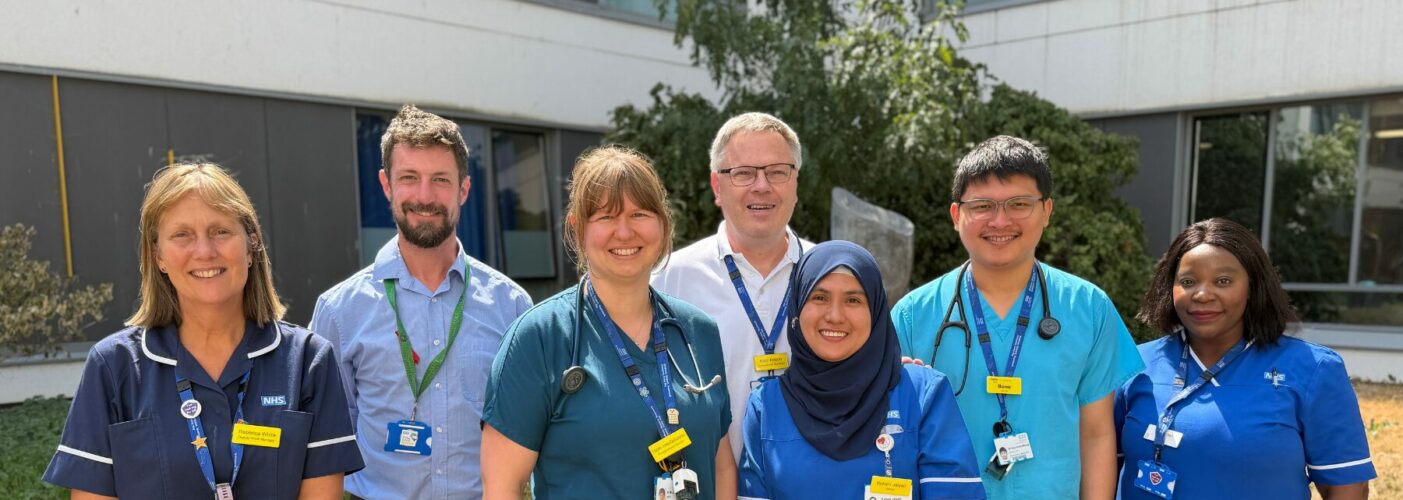
Musgrove Park Hospital’s acute medical unit has been rated the best in the country for overall satisfaction with doctor training in acute medicine.
The team achieved the top score in the 2026 General Medical Council national training survey, placing first out of 189 acute medical units across the country.
The annual survey asks doctors in training about their experience, including the quality of supervision, support, teaching, and the culture of the teams they work in.
The result is a major achievement for colleagues on Musgrove’s acute medical unit, which has consistently scored highly in previous years, often placing in the top five or top 10 nationally.
Dr Tom Payne, one of our consultants in acute medicine, says the recognition reflects the strong team culture across the unit.
“We’re really proud of the result,” he says. “We’ve had consistently high scores over the years and there’s definitely something nice about being number one and getting that top spot.
“It shows that we can be consistent, and that it’s not just a one-off. It’s something we’ve been able to maintain, which means it’s embedded in the way we work and is there all the time.”
Musgrove’s acute medical unit, known to most as AMU, cares for patients who are admitted to hospital with a wide range of urgent medical conditions.
That variety makes it a busy and fast-paced environment, but also one that offers a rich learning experience for doctors in training, as well as colleagues across the wider multidisciplinary team.
Dr Payne adds one of the strengths of the unit is that learning is seen as something everyone does together, regardless of role or level of experience.
“This has been a big team effort,” he adds. “It’s the way we all work together and learn together – not just our resident doctors learning from us, but we also learn from them.
“If there’s something we’re not sure about, we’ll look it up together and talk it through as a group.
“Every day is an opportunity to learn and improve, whether that’s me, the most senior consultant, or the newest person to the team.
“We’re embedding that in everything we do, so that every day is an opportunity to improve and learn something new. Hopefully that filters through the whole team, and everyone grows together.”
A key part of the unit’s approach is giving doctors in training the opportunity to develop their confidence and independence, while making sure they feel well supported.
“Our trainees really like the culture in our acute medical unit,” says Dr Payne. “There are so many opportunities because there’s such a variety of things happening, so they can learn and do different things.
“We try to get the balance right between letting people push themselves and step a little outside their comfort zone, but with the safety of supervision.
“They can try new things, become more independent, and know that if there’s something they’re not sure about, or if there are any problems, we’re there to help.”
The achievement has been described as a whole-team success, with consultants, resident doctors, nurses, pharmacists, physiotherapists, occupational therapists and other colleagues all playing an important role in creating a positive environment for learning and patient care.
“It’s not only the doctors who have contributed to our success,” Dr Payne adds. “We have pharmacists on the ward who I learn from every day, as well as our physiotherapists and occupational therapists who are always feeding things back to us, asking questions and flagging things we may have missed.
“Our nursing colleagues are also integral in looking after patients, with everyone here not only to care for patients, but also to help each other improve.
“Without all of those other teams, none of us could do as good a job as we do, and I think it makes the environment a really positive one.
“Everyone gets on well, we work well as a team, and I think that makes it a nice and safe environment to learn, train and improve.”
As well as recognising the quality of training in the department, the team hopes the result will have a lasting benefit for the hospital and its patients.
By giving doctors in training a positive experience at Musgrove, the team hopes many will choose to return in future as long-term colleagues.
Dr Payne says: “It’s good for us to know that our trainees have had a good experience, and hopefully that’s something we can continue to provide.
“Ultimately, we hope that by giving people a good experience, when those trainees move on, they might come back in five or 10 years and become long-term colleagues here, whether that’s on the acute medical unit or in another department.
“That good experience means people may want to come back and work with us for longer, and I think that’s really important.”
Colleagues at Yeovil Hospital’s acute medicine service have also significantly improved their scores over the last year, marking wider progress across our acute medicine teams.